










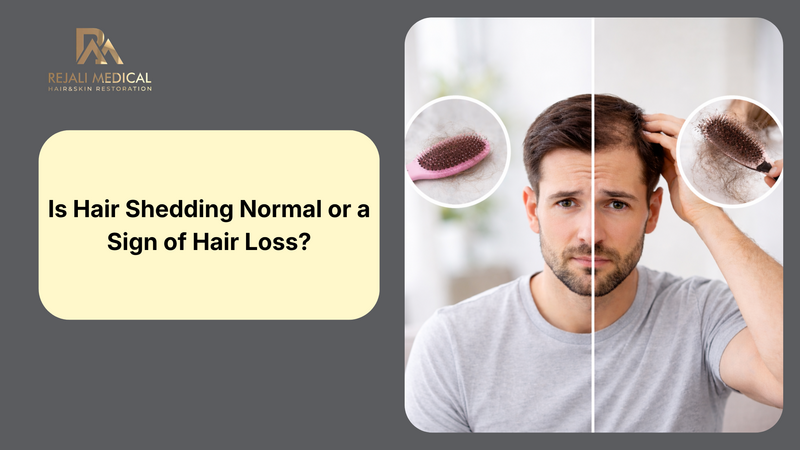
Is Hair Shedding Normal or a Sign of Hair Loss?
Finding hair on your pillow, in the shower drain, or stuck in your comb can definitely be a bit alarming. It’s a common worry for many, yet it’s often misunderstood. The truth is pretty straightforward, some hair loss is perfectly normal, but if you notice excessive or ongoing shedding, it might be a sign of something more serious.
Recognizing the difference early on can help you avoid unnecessary stress or, even more crucially, ensure you get the right treatment in a timely manner.
Understanding the Hair Growth Cycle
To figure out if your hair shedding is within the normal range, it’s helpful to know a bit about how hair grows.
Your hair goes through three key stages:
- Anagen (Growth Phase): This is when your hair is actively growing, and it can last for several years.
- Catagen (Transition Phase): During this stage, hair growth halts, and the hair starts to detach from the follicle.
- Telogen (Resting & Shedding Phase): Here, hair falls out to make space for new growth.
Typically, around 85–90% of your hair is in the growth phase at any given moment, while the rest is getting ready to shed. This natural cycle explains why it’s perfectly normal to lose a bit of hair each day.
How Much Hair Shedding Is Normal?
It’s perfectly normal to lose between 50 to 100 strands of hair each day.
You might notice a bit more shedding in certain situations:
- After washing your hair
- During seasonal changes (especially autumn)
- When detangling or brushing
As long as your hair bounces back and new strands keep coming in, this shedding is just a natural part of a healthy hair cycle.
Signs Your Hair Shedding Is Still Normal
If you’re noticing some hair shedding, it might actually be perfectly normal if:
- The amount of hair you’re losing stays about the same
- You don’t notice any thinning spots on your scalp
- The thickness of your ponytail hasn’t changed
- Your hairline looks just as it always has
- You can spot new baby hairs sprouting along your hairline
In these situations, there’s usually no need to worry!
When Hair Shedding Becomes a Concern
The issue arises when hair shedding exceeds the usual cycle and begins to impact hair density.
1. Sudden Increase in Hair Fall
If you start to notice a sudden increase in hair shedding that goes on for weeks, it might be a sign of telogen effluvium. This condition can be triggered by stress, illness, or hormonal changes.
2. Noticeable Thinning
You might start to notice that your hair feels lighter, less full, or even a bit flat compared to what you’re used to. This can often manifest as:
- A thinner ponytail
- A wider hair part
- Reduced overall volume
3. Visible Scalp or Bald Spots
If you start to see more of your scalp or spot some patchy areas, it’s not just regular shedding anymore, it’s a clear indication of active hair loss.
4. Receding Hairline
For many men (and some women), hair loss begins at the temples or crown. A gradual shift in your hairline is a key indicator.
5. Hair Isn’t Growing Back
Normal hair shedding is usually balanced out by new growth. If you notice that your hair isn’t being replaced, it might be a sign that your follicles are becoming weaker.
6. Changes in Hair Quality
As hair starts to become finer, weaker, or more brittle over time, it can indicate follicle miniaturization, an early sign of pattern hair loss.
Common Causes of Excessive Hair Shedding
There are several reasons why your hair might be shedding more than usual:
Stress and Lifestyle Factors
Chronic stress can lead to more hair entering the shedding phase. Factors like poor sleep and elevated cortisol levels can make this even worse.
Nutritional Deficiencies
Low levels of iron, protein, vitamin D, or B12 can weaken hair growth. Diet plays a major role in maintaining healthy follicles.
Hormonal Changes
Conditions such as thyroid imbalances, PCOS, pregnancy, or menopause can lead to hair shedding, whether it’s temporary or long-lasting.
Medical Conditions and Medications
Some health conditions or medications, like those for blood pressure, depression, or even acne, can lead to more hair loss than usual.
Hair Care Habits
Using heat styling tools too often, along with harsh products or tight hairstyles, can really take a toll on your hair, causing it to weaken and break in a way that looks like shedding.
Shedding vs Hair Loss: Why It Matters
It’s a common mix-up: many people think that temporary shedding is the same as permanent hair loss.
- Shedding is usually temporary and reversible
- Hair loss is progressive and may require treatment
If you don’t keep an eye on it, what begins as shedding could eventually turn into noticeable thinning or even pattern hair loss.
When to Take Action
If you’re experiencing any of the following, it might be a good idea to reach out to a specialist:
- Shedding that lasts longer than 6 to 8 weeks
- Noticeable thinning or areas of your scalp becoming visible
- Changes in your hairline
- A significant decrease in hair density
Catching these issues early can really help slow down or even reverse the hair loss process.
What Happens If Hair Loss Progresses?
If the condition moves beyond temporary shedding and becomes long-term hair loss, early treatments may not be enough on their own.
At this stage, options may include:
- Medical treatments to stabilise hair loss
- Non-surgical therapies to improve density
- Advanced restoration procedures
For individuals experiencing significant thinning or permanent hair loss, solutions like a hair transplant in Scottsdale can help restore natural hair growth and rebuild the hairline with long-lasting results when done at the right time.
Simple Ways to Support Healthy Hair
While not all hair loss can be prevented, you can support your hair health by:
- Maintaining a balanced, nutrient-rich diet
- Managing stress levels
- Avoiding excessive heat styling
- Using gentle, scalp-friendly products
- Getting regular health check-ups
These steps can help maintain stronger, healthier hair over time.
Don’t Ignore What Your Hair Is Telling You
Shedding hair is completely normal, but if you find yourself losing a lot more than usual, it could be your body’s way of telling you that something’s off. Instead of stressing over the occasional strand that falls out, try to keep an eye on any patterns.
If you see consistent changes, it’s a good idea to take action sooner rather than later.