









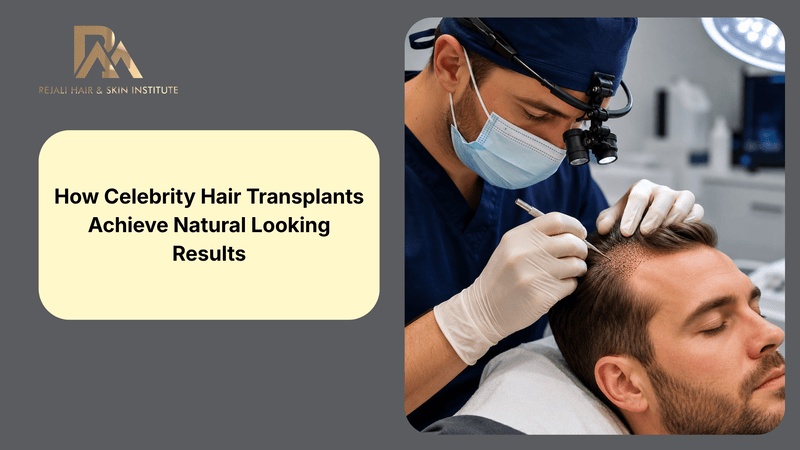
How Celebrity Hair Transplants Achieve Natural Looking Results
Hair transplants have changed dramatically over the years. What once created obvious, unnatural-looking results has evolved into a far more refined and personalized approach to hair restoration.
Today, many people looking up celebrity hair transplant results are often surprised by how natural modern procedures can appear. In many cases, it is difficult to tell that a procedure was ever done at all. Modern hair restoration focuses less on simply adding hair and more on creating results that blend naturally with a person’s facial features, hair pattern, and overall appearance.
This shift has been driven by advanced non-shaven FUE techniques, improved hairline design, and a more artistic approach to graft placement and density planning. Instead of harsh or artificial-looking hairlines, today’s procedures are designed to create softer, realistic results that age naturally over time.
A natural looking hair transplant is not about creating “perfect” hair. It is about restoring balance, confidence, and density in a way that looks authentic both on camera and in everyday life.
Why Modern Celebrity Hair Transplants Look Different Today
Older hair transplant procedures often focused mainly on coverage. While they restored hair, the results sometimes looked unnatural because of poor graft placement, harsh hairlines, or inconsistent density.
Modern non-shaven FUE hair restoration has changed that completely.
Today’s procedures focus heavily on:
- Natural hairline design
- Proper graft angles and direction
- Strategic density placement
- Preserving existing hair
- Creating soft and age-appropriate results
The Importance of a Natural Hairline Transplant
One of the biggest factors behind a natural result is the hairline itself.
A natural hairline transplant is carefully customized to fit the individual rather than following a generic pattern. Surgeons now pay close attention to:
- Facial symmetry
- Age
- Hair characteristics
- Ethnicity
- Existing hair density
- Future hair loss patterns
Natural hairlines are rarely perfectly straight. They often include slight irregularities and softer transitions that mimic how hair naturally grows.
This approach helps prevent the overly sharp or artificial appearance often associated with older transplant methods.
Why Non-shaven FUE Technology Changed Hair Restoration
Follicular Unit Extraction, commonly called FUE, has become one of the most popular approaches in modern hair restoration.
Instead of removing a large strip of scalp, non-shaven FUE extracts individual follicular units one at a time. This allows for:
- Minimal visible scarring
- Greater precision
- Faster healing
- More flexibility in graft placement
- More natural-looking density
Because grafts are placed individually, surgeons can carefully recreate the natural direction and pattern of hair growth.
Density Placement Matters More Than Most People Realize
Natural results are not created by placing the maximum number of grafts everywhere equally.
Instead, modern hair restoration focuses on visual density.
Hair density must be distributed strategically across different parts of the scalp to create a balanced appearance. The frontal hairline, temples, and mid-scalp often require different placement techniques to maintain a realistic look.
Celebrity hair transplant procedures often prioritize:
- Softer frontal density
- Gradual transitions
- Natural layering
- Appropriate spacing between grafts
Overpacking grafts or creating density that does not match natural growth patterns can make results appear unnatural.
Why Graft Angle and Direction Are Critical
Hair does not grow straight upward. Every region of the scalp has a slightly different growth direction and angle.
Modern non-shaven FUE procedures carefully replicate these natural patterns.
For example:
- Temple hair grows flatter against the scalp
- Frontal hairline grafts angle forward
- Crown hair often follows a circular growth pattern
Even small mistakes in graft direction can affect how natural the final result appears.
Modern Hair Transplants Focus on Undetectable Results
A major goal of modern procedures is creating an undetectable hair transplant.
Patients today often want:
- Natural styling flexibility
- Minimal visible signs of surgery
- Faster return to work
- Discreet recovery
- Results that blend naturally over time
Advanced non-shaven FUE techniques help support these goals by reducing visible scarring and allowing more customized placement.
Hair Restoration Is More Personalized Today
Another major shift in modern hair restoration is personalization.
No two patients experience hair loss in the exact same way. Factors such as:
- Hair texture
- Curl pattern
- Donor hair quality
- Facial structure
- Hair color contrast
- Long-term hair loss progression
All these factors influence surgical planning.
This personalized approach helps create more realistic and balanced outcomes instead of one-size-fits-all procedures.
Recovery and Growth Also Affect Natural Results
A natural result does not happen immediately after surgery.
Hair restoration is a gradual process. Newly transplanted follicles typically shed before entering a new growth cycle. Over several months, hair gradually becomes thicker and more refined.
Modern recovery protocols also help patients heal more discreetly with:
- Smaller extraction sites
- Reduced scabbing
- Minimal visible scarring
- Better graft survival rates
As the transplanted hair matures, the final result continues to improve in texture, density, and blending.
Choosing the Right Surgeon Matters
Technology alone does not create natural results.
The surgeon’s experience, planning approach, and artistic understanding remain some of the most important factors in achieving a natural looking hair transplant.
A successful procedure requires:
- Careful hairline planning
- Conservative graft management
- Long-term thinking
- Precision placement
- Attention to facial aesthetics
This balance between medical skill and artistry is what separates modern natural-looking results from outdated techniques.
Final Thoughts
Celebrity hair transplant results have helped change how people view modern hair restoration. Today’s procedures focus far more on subtlety, customization, and natural appearance than simply restoring lost hair.
Advanced FUE techniques, personalized hairline design, strategic density planning, and improved surgical precision now allow patients to achieve results that blend naturally with their existing hair.
A natural looking hair transplant is not about creating perfect hair. It is about creating realistic, balanced, and age-appropriate results that look authentic both up close and over time.
At Dr. Rejali Hair & Skin Institute, advanced non-shaven FUE techniques and personalized treatment planning are designed to help patients achieve natural-looking outcomes that complement their appearance and long-term hair restoration goals.
Book a consultation to discuss their concerns, evaluate treatment options, and learn which approach may best support their goals.
FAQs
What makes celebrity hair transplant results look so natural today?
Modern hair restoration focuses on natural hairline design, proper graft placement, strategic density planning, and advanced non-shaven FUE techniques. These improvements help create results that blend naturally with existing hair and facial features.
Why do modern hair transplants look better than older procedures?
Older procedures often focused mainly on coverage, which sometimes created unnatural density or harsh hairlines. Modern techniques focus more on artistry, hair direction, facial balance, and personalized treatment planning.
Does non-shaven FUE leave visible scars?
Non-shaven FUE procedures typically create very small extraction points that heal with minimal visible scarring when performed properly. Many patients can wear shorter hairstyles after healing without noticeable scarring.
How long does it take for hair transplant results to look natural?
Hair restoration is a gradual process. Transplanted hair usually begins growing within several months, while fuller and more natural-looking results continue developing over the first year.
Can people usually tell if someone had a hair transplant?
Modern non-shaven FUE techniques are designed to create subtle and natural-looking results. In many cases, once healing and growth are complete, it becomes very difficult to identify that a procedure was performed.
Who is a good candidate for a natural-looking hair transplant?
Many people experiencing thinning hair or hair loss may be candidates for modern hair restoration. A consultation helps determine the best treatment approach based on hair loss patterns, donor hair quality, and long-term goals.