









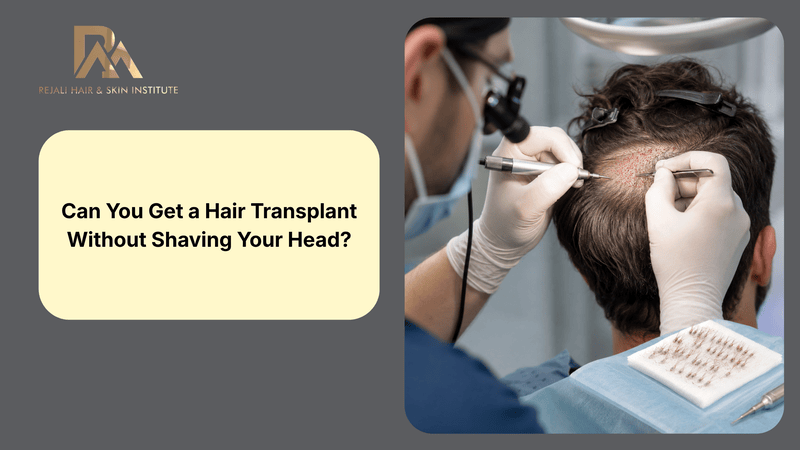
Can You Get a Hair Transplant Without Shaving Your Head?
Hair restoration has changed significantly over the years. Many people interested in restoring their hair are no longer only focused on results. They are also thinking about privacy, downtime, and how quickly they can return to their normal routine.
One of the most common questions patients ask today is: Can you get a hair transplant without shaving your head?
The answer is yes. Modern advancements in non-shaven FUE hair restoration now make it possible for many patients to undergo a hair transplant without fully shaving their hair. This approach is commonly known as a no-shave hair transplant or no-shave FUE.
For patients who want a more discreet procedure, especially professionals, public-facing individuals, or those with longer hairstyles, this option has become increasingly popular.
What Is a No-Shave Hair Transplant?
A no-shave hair transplant is a form of Follicular Unit Extraction (FUE) where the surrounding hair is left largely untouched during the procedure.
Traditional FUE procedures often involve shaving a large portion of the scalp to improve access and visibility. While effective, some patients feel uncomfortable with the noticeable appearance during recovery.
No-shave FUE offers a more discreet alternative.
Instead of shaving the entire head, surgeons carefully work around existing hair while extracting and placing individual follicular grafts. This allows many patients to maintain their current hairstyle during the healing process.
How Does No-Shave FUE Work?
The procedure still follows the same core principles as traditional FUE.
Individual follicular units are extracted from the donor area and implanted into thinning or balding regions. The main difference is how the surrounding hair is managed during surgery.
Depending on the patient’s hair type, length, and treatment goals, surgeons may:
- Leave most of the hair completely unshaven
- Trim only small hidden donor sections
- Use surrounding hair to conceal treated areas
Why More Patients Are Choosing Hair Transplants Without Shaving Their Head
Many patients today want results that fit naturally into their lifestyle.
A hair transplant without shaving head areas can offer several advantages:
- Greater privacy
- Less noticeable recovery
- Easier return to work
- Ability to maintain longer hairstyles
- Reduced emotional stress during healing
For many people, the ability to keep their appearance relatively unchanged during recovery is a major benefit.
This is especially appealing for:
- Business professionals
- Actors and performers
- Women with longer hair
- Public-facing professionals
- Patients are concerned about social visibility
Is Everyone a Candidate for No-Shave FUE?
Not every patient is an ideal candidate for a no-shave hair transplant.
Several factors influence whether this approach is suitable:
- Hair length
- Hair density
- Degree of hair loss
- Number of grafts needed
- Donor area quality
- Hair texture
Patients requiring a very large number of grafts may still benefit more from a traditional shaved approach for surgical efficiency and graft management.
However, many patients with mild to moderate hair loss can successfully undergo no-shave FUE procedures.
An individualized consultation is important to determine the best option.
Does No-Shave FUE Affect Results?
One common concern is whether avoiding a full shave compromises the quality of results.
When performed properly, no-shave FUE can still achieve natural-looking outcomes with excellent graft survival.
The success of the procedure depends more on:
- Surgical planning
- Graft handling
- Hairline design
- Density placement
- Surgeon experience
Modern non-shaven FUE techniques allow surgeons to carefully place grafts while preserving the natural appearance of surrounding hair.
Why Natural Hairline Design Still Matters
Even with no-shave procedures, natural hairline planning remains one of the most important parts of hair restoration.
A natural hairline transplant is carefully designed to match:
- Facial structure
- Age
- Existing hair pattern
- Long-term hair loss progression
Modern hair restoration avoids creating overly straight or artificial-looking hairlines.
Instead, surgeons focus on softer transitions and irregularities that mimic natural hair growth patterns.
This helps results blend naturally with existing hair.
Recovery After No-Shave FUE
Recovery after a no-shave hair transplant is often more discreet compared to traditional methods.
Since surrounding hair remains longer, it can help conceal:
- Redness
- Small scabs
- Healing donor areas
Most patients can return to non-strenuous activities relatively quickly, although healing timelines still vary from person to person.
Patients are typically advised to:
- Avoid strenuous exercise initially
- Follow washing instructions carefully
- Protect grafts during early healing
- Avoid excessive touching or friction
As healing progresses, transplanted follicles gradually enter new growth cycles.
How Long Does It Take to See Results?
Hair transplant results take time to develop naturally.
Most patients experience:
- Initial shedding of transplanted hairs
- Gradual regrowth over several months
- Continued thickening and maturation over time
Visible improvement often begins within a few months, while fuller results continue developing throughout the first year.
Patience is an important part of the process.
Why Precision Matters in No-Shave Procedures
No-shave FUE requires a high level of precision and planning.
Working around existing hair can make the procedure more technically demanding compared to traditional shaved methods.
Important factors include:
- Graft angle control
- Precise extraction
- Strategic placement
- Preservation of surrounding hair
- Consistent density planning
Modern Hair Restoration Focuses on Discretion
One reason no-shave FUE continues growing in popularity is the shift toward more discreet hair restoration.
Today’s patients often want:
- Natural-looking results
- Minimal disruption to daily life
- Faster social recovery
- Less visible signs of surgery
Final Thoughts
Hair restoration is no longer limited to highly visible procedures that require dramatic appearance changes during recovery. Modern no-shave FUE techniques now allow many patients to restore hair while maintaining a more natural and discreet appearance throughout the process.
A hair transplant without shaving the head areas can be an excellent option for patients who value privacy, flexibility, and natural-looking results. The right approach depends on individual hair characteristics, treatment goals, and the extent of hair loss.
At Dr. Rejali Hair & Skin Institute, advanced non-shaven FUE techniques and personalized treatment planning are designed to help patients achieve natural-looking results with approaches tailored to their lifestyle and goals. Book a consultation to discuss available options and determine which treatment approach may best support their hair restoration needs.
Frequently Asked Questions
-
Can you get a hair transplant without shaving your head?
Yes. Many patients can undergo a no-shave hair transplant using advanced non-shaven FUE techniques that allow surrounding hair to remain largely untouched during the procedure.
-
Does no-shave FUE leave visible scars?
Non-shaven FUE procedures typically create very small extraction points that heal with minimal visible scarring when performed properly.
-
Is no-shave FUE more difficult than traditional FUE?
No-shave FUE can be more technically demanding because surgeons work around existing hair. Precision and experience are important for achieving natural-looking results.
-
How long does recovery take after no-shave FUE?
Initial healing usually occurs within a couple of weeks, while hair growth develops gradually over several months.
-
Is no-shave FUE suitable for women?
Yes, no-shave FUE is often popular among women because it allows them to maintain longer hairstyles during recovery.