

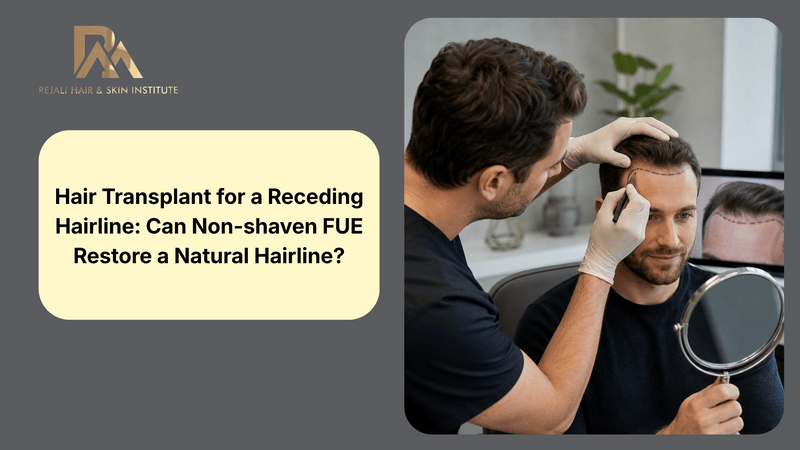
Hair Transplant for a Receding Hairline: Can Non-shaven FUE Restore a Natural Hairline?
A receding hairline is often one of the earliest signs of hair loss, but it doesn’t have to be permanent. Whether you’ve noticed thinning at the temples or a gradually changing hairline, early treatment can help restore a fuller, natural-looking appearance.
People often think, can a hair transplant fix a receding hairline? In many cases, the answer is yes. A hair transplant for a receding hairline can rebuild the frontal hairline using your own healthy hair follicles. For suitable candidates, Non-shaven FUE also offers a discreet option, allowing hair restoration without shaving the entire head.
What Causes a Receding Hairline?
A receding hairline is most commonly caused by genetics and male pattern hair loss, but other factors can also contribute. These include hormonal changes, aging, traction from tight hairstyles, certain medical conditions, scarring, or previous injury.
Identifying the underlying cause is an important first step. While a hair transplant restores lost hair, it does not prevent future hair loss in untreated areas. A personalized evaluation helps determine whether a hair transplant is the right solution and how the hairline should be planned for long-term, natural-looking results.
Can a Hair Transplant Fix a Receding Hairline?
Yes, a hair transplant can effectively restore a receding hairline for many suitable candidates. During the procedure, healthy hair follicles are taken from the donor area, typically the back or sides of the scalp, and transplanted to the thinning or recessed frontal hairline to create a fuller, more natural appearance.
A good candidate typically has:
- Healthy donor hair
- Stable hair loss
- Good scalp health
- Realistic expectations
The success of a hair transplant depends on more than replacing lost hair. Careful planning, donor hair quality, and a personalized approach are essential for achieving a natural-looking result that continues to look balanced over time.
Why Hairline Design Matters More Than the Number of Grafts
Many patients focus on the number of grafts needed, but graft count alone does not determine the quality of the result. A natural-looking hairline depends on design, placement, and balance.
The hairline is not supposed to look perfectly straight. Natural hairlines usually have small irregularities, softer edges, and subtle transitions. If the hairline is placed too low or made too dense in the wrong area, the result can look artificial over time.
During planning, the surgeon considers:
- Facial proportions
- Age
- Forehead shape
- Existing hair density
- Hair texture
- Donor hair quality
- Future hair loss progression
A successful hair transplant for a receding hairline should improve balance without making the hairline look overdone. The result should fit the patient’s face now and continue to look natural as they age.
Why More Patients Choose Non-shaven FUE for Frontal Hair Loss
Non-shaven FUE is a hair restoration approach that allows suitable patients to undergo treatment without shaving the entire head. Instead, the surgeon works carefully around the existing hair or trims only limited areas when needed.
This can be especially helpful for patients with frontal hair loss who want a more discreet treatment experience. Since the frontal hairline is highly visible, many patients want to avoid a dramatic change in appearance during recovery.
Benefits of Non-shaven FUE may include:
- No need to shave the entire head
- More discreet recovery
- Minimal visible signs after the procedure
- Easier return to professional or social settings
- Better option for patients with longer hairstyles
- A more private treatment experience
This approach can be appealing for business professionals, public-facing individuals, and patients who want to maintain their usual hairstyle as much as possible.
What Results Can You Expect After a Hairline Transplant?
Hair transplant results develop gradually. The restored hairline does not look final immediately after the procedure.
In the first several days, patients may notice mild redness, small scabs, or temporary sensitivity in the treated area. These early changes are part of normal healing. With Non-shaven FUE, surrounding hair may help conceal the treated areas more effectively, depending on the patient’s hairstyle and the size of the procedure.
Most patients can return to many routine activities within a short period, but they must follow post-procedure instructions carefully. Protecting the grafts during early healing is important for proper growth.
A typical growth timeline may include:
- Initial healing during the first couple of weeks
- Temporary shedding of transplanted hairs
- Early regrowth begins after a few months
- Gradual thickening over several months
- Fuller results develop around 9 to 12 months
Some patients continue to see refinement beyond the first year as the transplanted hair matures and blends with the surrounding hair.
Choosing a Natural Approach to Hairline Restoration
A receding hairline can often be restored, but the best results come from careful planning. The goal is not simply to fill in the front of the scalp. The goal is to create a hairline that looks natural, suits the patient’s face, and supports long-term hair restoration goals.
At Dr. Rejali Hair & Skin Institute, personalized Non-shaven FUE hair restoration is designed to help suitable patients achieve natural, age-appropriate hairlines with a discreet treatment approach. Each plan is based on the patient’s hair loss pattern, donor hair quality, facial structure, and long-term needs.
If you are considering a hair transplant for a receding hairline, scheduling a consultation can help determine whether Non-shaven FUE is the right option for you.
FAQs
-
Can a hair transplant permanently fix a receding hairline?
Transplanted follicles are generally considered permanent because they are taken from donor areas that are more resistant to hair loss. However, natural hair loss may continue in untreated areas. Some patients may need ongoing hair loss management to maintain overall density and balance.
-
Is Non-shaven FUE a good option for a receding hairline?
Non-shaven FUE can be a good option for suitable patients who want to restore the hairline without shaving the entire head. It may offer a more discreet recovery while still allowing precise graft placement for natural-looking results.
-
How many grafts are usually needed for a receding hairline?
The number of grafts depends on the level of recession, hair characteristics, donor hair quality, and desired density. Mild temple recession may require fewer grafts, while more advanced frontal hair loss may require a larger treatment plan.
-
How long does it take to see results after a hair transplant for frontal hair loss?
Most patients begin to see early growth after a few months. Fuller results usually develop over 9 to 12 months, although timing can vary from person to person.
-
Will a hair transplant for a receding hairline look natural?
Yes, when the procedure is planned carefully. Natural-looking results depend on personalized hairline design, correct graft angle, realistic density, and experienced surgical placement.