










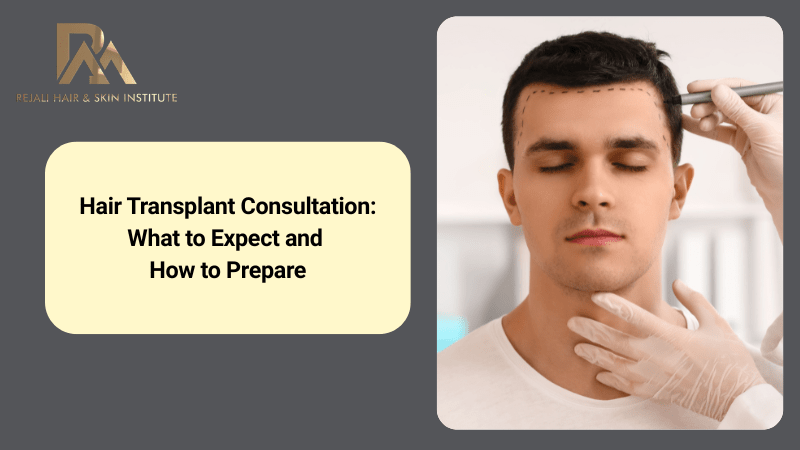
Hair Transplant Consultation: What to Expect and How to Prepare
A hair transplant consultation is a planning visit, not a commitment to surgery. It should give you a clearer view of your hair loss, donor supply, treatment choices, costs, and likely long-term path.
Key Takeaways
- The consultation begins with your medical and hair-loss history.
- Scalp and donor-area assessment help determine candidacy and graft availability.
- FUE and FUT may suit different patterns, goals, and donor characteristics.
- A thoughtful plan accounts for future hair loss, not only today’s appearance.
- Good questions help you compare clinics, surgeons, safety practices, and follow-up care.
What the consultation is for
“How many sessions will I need?” is one of the first questions many patients ask, and the honest answer depends on your pattern of loss, donor supply, hair characteristics, and how your hair may change over time — which is exactly what the consultation is designed to establish. The evaluation starts by identifying where thinning is occurring and how extensive it is, often using the Norwood scale for male pattern loss, while women typically need a broader discussion of diffuse thinning and its possible causes.
Candidacy isn’t decided by how much hair you hope to restore. The surgeon needs to confirm the donor area holds enough suitable follicles, that the loss pattern is reasonably understood, and that your expectations match what’s achievable — factoring in medical conditions, medications, prior procedures, smoking, and healing concerns. Some patients are better served by stabilizing hair loss or investigating another cause of shedding before surgery, or by a corrective plan if they’ve had an earlier transplant. Tell the surgeon what bothers you most and how you normally wear your hair, and expect the conversation to cover nonsurgical options too — a transplant redistributes existing follicles, it doesn’t create an unlimited new supply, so surgery is only one possible response depending on what the evaluation finds.
The physical exam
Bring a complete list of medications, supplements, allergies, and relevant conditions, and expect questions about when thinning started, whether it’s accelerated, and whether relatives have experienced similar loss — the goal is identifying anything that could change the timing, safety, or type of treatment recommended, not judging your history. The surgeon will then examine both the thinning area and the donor region at the back and sides, assessing follicle quality, scalp health, and whether the donor supply is sufficient for the coverage you want. This step can be sobering if the donor area is more limited than expected, but an honest assessment is what protects you from a plan that overspends a finite resource.
Hair count alone doesn’t tell the whole story — coarse hair provides more visual coverage than fine hair, and curl affects how density reads, so the clinician will likely compare density across scalp zones and note growth direction. Standardized photographs (front, sides, top, crown) may document your baseline; ask how they’re captured and whether any digital preview is an estimate rather than a guarantee. Use this part of the visit to raise whatever concern you’d otherwise keep to yourself (pain, scarring, cost, fear the result will look unnatural) and write down the answers, or bring someone with you if that helps.
Treatment planning: technique, grafts, and the hairline
Once the assessment is complete, the conversation turns to design. FUE removes individual follicular units from the donor area; FUT removes a strip of donor skin divided into grafts — they differ in extraction, scarring, recovery, and donor management, and the surgeon should explain which fits your pattern and priorities rather than presenting one as universally superior. The graft estimate itself should reflect the treatment area, your existing density, hair caliber, donor availability, and desired coverage — a planning range, not a promised density. From there, the surgeon can explain whether one session is sensible or whether staged treatment is more responsible; our page on [planning multiple transplant sessions] covers why session counts vary so much from patient to patient.
Hairline design is both technical and aesthetic: it should reflect your age, facial proportions, and natural irregularity, since an aggressively low, straight line can look out of place later and consume donor follicles you’ll want elsewhere. The plan should also address what happens as your untreated native hair continues to thin — a conservative hairline and donor-aware graft plan usually serves you better long-term than maximizing today’s visual change.
Cost, recovery, and realistic expectations
Cost should be discussed alongside the medical plan, not separately. Ask what a written estimate includes — consultation, procedure, medications, postoperative visits, aftercare — and what happens if the plan changes after a closer exam; our no-shave FUE cost page has useful context on how technique complexity and graft count move a quote. Expected effects like swelling, redness, and crusting should be explained alongside real risks — infection, poor healing, an unnatural hairline — and you should know which symptoms warrant a call.
Recovery is gradual: transplanted hairs often shed before new growth appears, and growth is measured in months, not days, so early photos aren’t a fair read of the final result. Our [hair transplant recovery timeline] and [before-and-after photo guide] go deeper on both points — when to expect visible change, and how to evaluate a clinic’s gallery for consistent lighting, angle, and comparable hair type rather than the most dramatic image in the set.
How to prepare
You don’t need to diagnose yourself or pick between FUE and FUT before you arrive — just bring accurate information and clear goals. Prepare a current medication and allergy list, note prior operations or bleeding/clotting concerns, and don’t stop any medication on your own beforehand. Write down when your thinning started and whether it’s been steady or sudden, along with family history and (if applicable) records from a prior transplant — graft numbers and technique from that procedure can materially affect a revision plan. Recent photos in ordinary light are useful too.
Then bring a short list of questions rather than a long document — what’s causing my hair loss, how much donor hair can be used while preserving future options, which parts of the procedure will the surgeon perform directly, and what recovery looks like in the first several weeks. Arrive with preferences, but leave room for the clinical findings — a plan adjusted to protect your donor supply is more useful than one that just confirms what you hoped to hear.
Choosing the right clinic
Look beyond a polished website. Confirm who evaluates you, designs the plan, performs extraction and placement, and handles follow-up — ask specifically about board certification, years practicing hair restoration, and experience with your pattern, texture, or prior surgery. Dr. Farhad Rejali has been a member of the American Board of Hair Restoration Surgery since 2010 and has practiced hair restoration since 2006; verify any surgeon’s credentials independently and ask how that experience applies to your case. Our Arizona surgeon checklist organizes these questions in more depth, including facility standards and safety protocols.
Ask where the procedure takes place, how sterile technique and monitoring are handled, and who’s available after hours. Request written aftercare instructions covering washing, sleeping position, exercise, and when normal activity resumes, so you understand the practical commitment before scheduling. If you’re comparing more than one clinic, put each plan on the same terms — technique, graft estimate, hairline design, surgeon involvement, cost inclusions, and follow-up — and be cautious of any consultation that leads with price or promises a fixed outcome without examining your donor area first.
Start with a free consultation
A hair transplant consultation should replace guesswork with a medical assessment and a long-term plan. Bring your records, describe your goals honestly, and ask who will perform each part of the procedure, how donor hair will be protected, what recovery involves, and what the quoted cost includes. If you’re ready to talk through your options, a free consultation can help you take the next step with clearer expectations.
Frequently Asked Questions
How long does a hair transplant consultation take? The length varies with the complexity of your history and examination. A thorough visit should allow time to assess your scalp and donor area, discuss options, review risks and costs, and answer your questions without rushing.
Do I need to choose FUE or FUT before the appointment? No. The surgeon should recommend a technique after considering your donor supply, hair characteristics, pattern of loss, goals, and medical history.
Can a consultation determine how many grafts I need? Usually a reasoned estimate or range, but the exact number depends on the areas being treated, desired coverage, donor availability, and future planning.
Will my transplanted hair grow immediately? No. Transplanted hairs may shed during early recovery, and new growth develops gradually over several months. Your surgeon should explain the expected timeline.
What should I bring to the consultation? Medication and medical information, details of previous hair-loss treatments, relevant family history, and a written list of questions — plus photos showing your hair over time, if available.
Should I get more than one consultation? A second opinion can help when you’re uncertain about the diagnosis, procedure, graft estimate, surgeon involvement, or cost — compare the reasoning behind each plan rather than choosing on the lowest quote alone.