










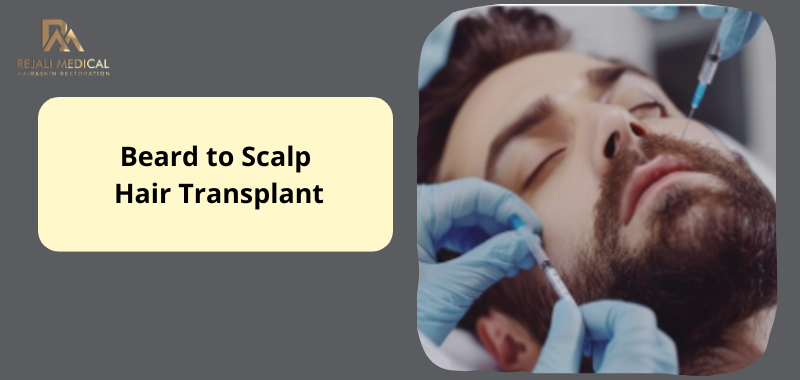
Hair loss is a deeply personal concern that affects confidence, self-image, and quality of life. While traditional scalp-to-scalp hair transplantation remains the most common solution, not every individual has sufficient donor hair available on the scalp. In such cases, advanced hair restoration techniques have evolved to offer alternative donor sources. One of the most effective and increasingly popular options is the beard to scalp hair transplant, also referred to as beard to head hair transplant or beard to scalp transplant.
This technique allows surgeons to utilize robust beard hair follicles to improve scalp density, address advanced hair loss, and enhance results when scalp donor supply is limited. When performed with proper planning and expertise, beard hair can integrate naturally into the scalp and provide long-term, satisfying outcomes.
This in-depth guide explains how beard to scalp hair transplant works, who it is best suited for, the benefits and limitations, the recovery process, and what kind of results patients can realistically expect.
Understanding Beard to Scalp Hair Transplant
A beard to scalp hair transplant is a specialized form of follicular unit extraction (FUE) in which hair follicles are harvested from the beard area typically the chin, jawline, or upper neck and transplanted into areas of hair thinning or baldness on the scalp.
Beard hair differs from scalp hair in texture, diameter, and growth characteristics. It is usually thicker and more resilient, which makes it a valuable donor source, particularly for increasing density in areas such as the crown, mid-scalp, or for reinforcing previously transplanted regions.
This approach is not a replacement for traditional scalp donor hair, but rather a complementary technique used in carefully selected cases.
Why Beard Hair Is Used as a Donor Source
Beard hair offers several unique advantages that make it suitable for scalp transplantation when used appropriately:
Strong and Durable Follicles
Beard hair follicles tend to be more robust than scalp hair follicles. Their thicker diameter can create the visual impression of greater density when strategically placed.
Expanded Donor Availability
For individuals with advanced hair loss or previous transplant procedures, scalp donor reserves may be limited. A beard to head hair transplant expands the donor pool, allowing for more comprehensive restoration.
Ideal for Density Enhancement
Beard hair is especially useful for adding volume behind the hairline or in the crown area, where softer scalp hair can be blended in front for a natural transition.
Long-Term Growth Potential
Once transplanted, beard hair follicles retain their resistance to hair loss and can continue growing permanently on the scalp.
Who Is a Good Candidate for Beard to Scalp Transplant
Not everyone is an ideal candidate for a beard to scalp hair transplant. Proper evaluation is essential to achieve natural and balanced results.
Suitable Candidates Include:
- Individuals with advanced male pattern baldness
- Patients with limited scalp donor hair
- Those who have undergone previous hair transplants and need additional density
- Individuals with healthy, dense beard growth
Factors That Must Be Considered:
- Beard hair density and distribution
- Skin healing characteristics
- Contrast between beard hair and scalp hair texture
- Long-term hair loss progression
A thorough consultation helps determine whether a beard to scalp transplant is appropriate or whether alternative strategies should be considered.
How Beard to Scalp Hair Transplant Works
The procedure follows the principles of FUE hair transplantation but requires additional precision due to differences between beard and scalp tissue.
1. Donor Area Assessment
The surgeon evaluates the beard area to identify zones where follicle extraction can be performed without causing visible thinning or scarring. The goal is to preserve a natural beard appearance.
2. Follicular Unit Extraction
Individual follicular units are carefully extracted using specialized micro-punch tools. Beard skin is more vascular and sensitive than scalp skin, making surgical expertise critical.
3. Graft Preparation
Extracted grafts are sorted and preserved in a controlled environment to maintain follicle viability.
4. Recipient Site Creation
Tiny incisions are made in the scalp following natural hair growth angles and directions. Proper angulation is essential for ensuring that beard hair blends seamlessly with existing scalp hair.
5. Graft Implantation
Beard hair grafts are implanted strategically, often behind the frontal hairline or mixed with scalp hair to achieve a natural appearance.
Preparing for a Beard to Head Hair Transplant
Preparation plays a crucial role in surgical success and recovery.
Pre-Procedure Guidelines
- Avoid smoking and alcohol before surgery
- Follow medical instructions regarding medications
- Keep beard and scalp clean prior to the procedure
- Maintain realistic expectations through consultation
A personalized treatment plan is created based on hair characteristics and long-term goals.
What to Expect on Procedure Day
A beard to scalp hair transplant is typically performed under local anesthesia. Depending on the number of grafts, the procedure may take several hours. Patients remain comfortable throughout the process and are able to resume light activities shortly after the procedure.
Recovery and Healing Process
Healing after a beard to scalp transplant involves two donor areas the beard and the scalp.
Immediate Recovery
- Mild redness and swelling in both areas
- Small scabs that resolve within days
- Minimal discomfort when post-care instructions are followed
Short-Term Healing
- Beard donor area heals quickly due to excellent blood supply
- Transplanted hairs may shed within the first few weeks, which is normal
Long-Term Recovery
- New hair growth begins around 3–4 months
- Noticeable improvement by 6–9 months
- Full results typically visible within 12–18 months
Results and Long-Term Maintenance
When planned correctly, beard to scalp hair transplant results can appear natural and well-integrated.
What Results Look Like
- Improved scalp coverage
- Enhanced density in thinning areas
- Permanent hair growth
Maintenance
Transplanted beard hair can be washed, cut, and styled like natural scalp hair. Routine hair care practices are sufficient to maintain results.
Risks and Considerations
While generally safe, beard to scalp transplant carries certain considerations:
- Texture mismatch if poorly planned
- Overharvesting of beard donor area
- Temporary redness or pigmentation changes
- Uneven growth if graft placement is improper
Choosing an experienced surgeon significantly reduces these risks.
Cost Considerations
The cost of a beard to scalp hair transplant depends on several factors:
- Number of grafts required
- Surgical complexity
- Donor and recipient area management
- Experience of the medical team
A detailed consultation is necessary for accurate planning and cost estimation.
Frequently Asked Questions
Is beard to scalp hair transplant permanent?
Yes. Once transplanted, beard hair follicles continue to grow permanently on the scalp.
Will beard hair look natural on the scalp?
When placed correctly and blended with scalp hair, results can look natural and balanced.
Can beard hair be used alone?
In most cases, beard hair is combined with scalp hair for optimal aesthetics.
Is there an age limit for this procedure?
There is no strict age limit, but candidates should be in good health with stable hair loss patterns.
Conclusion
So, what truly defines a successful beard to scalp hair transplant? It is not simply the number of grafts transferred, but how carefully density, placement, and long-term planning are executed. When beard to head hair transplant procedures are performed using refined FUE techniques, with close attention to graft selection, scalp vascularity, and future hair loss patterns, the results can be natural-looking, durable, and age-appropriate.
The overall effectiveness of a beard to scalp transplant depends on multiple factors, including surgical expertise, individualized density planning, responsible donor area management, and realistic patient expectations. Choosing the appropriate balance between scalp and beard grafts requires a thoughtful approach that prioritizes both cosmetic goals and long-term scalp health.
At Rejali Medical, a personalized approach to beard to scalp hair transplant planning focuses on evaluating each patient’s hair characteristics, pattern of hair loss, and anticipated progression. This tailored strategy helps achieve results that appear natural, balanced, and consistent over time supporting both immediate improvement and long-term satisfaction.