










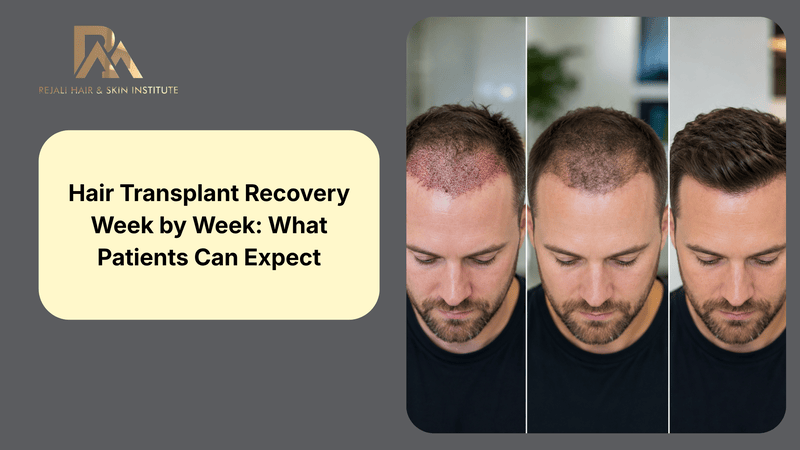
Hair Transplant Recovery Week by Week: What Patients Can Expect
Hair transplant recovery does not happen overnight. Your scalp goes through several stages of healing before the transplanted follicles begin producing visible new hair. Redness, scabbing, temporary shedding, and periods when very little seems to be happening can all be part of the process.
If you are considering a hair transplant in Scottsdale, knowing what typically happens during the first few weeks can make recovery easier to understand and help you set realistic expectations.
Week 1: Protecting the New Grafts
The first week is primarily about healing and protecting the newly transplanted follicles.
During the first few days, you may notice redness, mild swelling, tenderness, tightness, or small scabs around the grafts. The donor area may also feel sensitive as it heals.
The transplanted grafts are particularly vulnerable during this early stage. Follow your surgeon’s instructions carefully regarding washing, sleeping position, physical activity, and touching the scalp.
Avoid scratching or picking at scabs, even if the scalp becomes itchy.
What You May Notice
- Redness and tenderness
- Small scabs around transplanted follicles
- Mild swelling
- Temporary numbness or sensitivity
- Itching as the scalp begins to heal
The intensity of these effects varies depending on the procedure and individual healing response.
Week 2: Scabs Begin to Clear
By the second week, the scalp often starts looking noticeably better.
Scabs generally begin loosening and coming away with appropriate washing according to your surgeon’s instructions. Redness and swelling should also continue to improve for most patients.
The transplanted hairs may still be visible at this point, although some may already begin to shed.
Do not try to speed up the process by aggressively rubbing or removing crusts. Follow the specific washing and scalp-care instructions provided by your surgical team.
Weeks 3 to 4: Shedding May Begin
This stage can surprise patients who expect their transplanted hair to simply continue growing.
Many transplanted hair shafts begin to fall out several weeks after surgery. This temporary shedding is commonly referred to as shock loss.
Seeing newly transplanted hair fall out can be concerning, but shedding the hair shaft does not necessarily mean the transplanted follicle has been lost. The follicles typically remain beneath the scalp and enter a resting stage before new growth begins.
By the end of the first month, the scalp may look similar to how it did before the procedure.
What Happens After the First Month?
Once the visible signs of surgery have largely resolved, the next stage requires patience.
During months two and three, there may be very little visible change. The transplanted follicles are progressing through their natural hair cycle, and many are still in a resting phase.
New growth often starts becoming noticeable around the third or fourth month, although timing differs among patients. Early hairs may initially appear fine, short, or uneven.
Months 4 to 6: Early Growth Becomes Visible
As more follicles enter an active growth phase, the transplanted area can gradually begin to fill in.
The early hairs may not have the thickness, texture, or appearance they will eventually develop. Different follicles can also begin growing at different times, so uneven growth during this stage is not unusual.
This is an early result rather than the final outcome.
Months 6 to 9: More Noticeable Changes
Between six and nine months, growth often becomes easier to see.
New hairs may become longer and thicker, and coverage can gradually improve. Patients may also find that the transplanted hair becomes easier to style as it matures.
Progress varies considerably, which is why comparing your recovery with another patient’s photos or timeline can sometimes create unrealistic expectations.
Around 12 Months and Beyond
By approximately one year, many patients can see a substantial portion of their result. Hair may continue to mature in thickness, texture, and appearance beyond this point.
Some transplanted areas can take longer to develop than others. Your surgeon can evaluate your progress and explain when it is reasonable to assess the outcome based on your individual procedure.
What Can Affect Your Recovery Timeline?
There is no single recovery schedule that applies exactly to everyone. Healing and hair growth can be influenced by factors such as the technique used, number and location of grafts, hair characteristics, scalp condition, and individual healing response.
Following post-procedure instructions is also important. Your surgeon may provide specific guidance about washing, exercise, sleeping, sun exposure, and when you can return to normal activities.
When Should You Contact Your Surgeon?
Some redness, itching, tenderness, scabbing, and shedding can be expected during recovery. Symptoms should generally improve rather than become progressively worse.
Contact your surgeon if you experience increasing pain, significant or worsening swelling, persistent bleeding, unusual drainage, fever, or another symptom that concerns you.
Your surgical team’s instructions should always take priority over general recovery timelines found online.
A Successful Recovery Takes Time
The first few weeks after a hair transplant are mainly about allowing the scalp and grafts to heal. The next few months are about waiting for the follicles to complete their resting phase and begin producing new hair.
Visible growth commonly begins around three to four months, with more noticeable changes developing later in the year. Individual results and timelines vary.
If you are considering a hair transplant in Scottsdale, a consultation with an experienced hair transplant surgeon can help you understand the procedure, recovery requirements, and timeline you may expect based on your hair loss and treatment plan.
Schedule a consultation to discuss your hair restoration options and learn what to expect before, during, and after a hair transplant.