










Hair Transplant Results: Understanding FUE vs FUT Hair Transplant Techniques
Hair transplant results can be life-changing when the right technique is matched with the right patient. As more people look for long-term hair restoration, two methods usually come up during research: FUE and FUT hair transplant techniques.
Both methods move healthy hair follicles from a donor area, usually the back or sides of the scalp, to thinning or bald areas. The goal is the same, but the way the follicles are collected is different. That difference can affect scarring, recovery time, graft numbers, and the overall treatment plan.
If you are comparing FUE vs FUT hair transplant options, the key point is this: the best result does not depend on the technique alone. It depends on surgeon skill, donor hair quality, graft handling, hairline planning, aftercare, and realistic expectations.
What Is FUE and FUT Hair Transplant?
FUE Hair Transplant
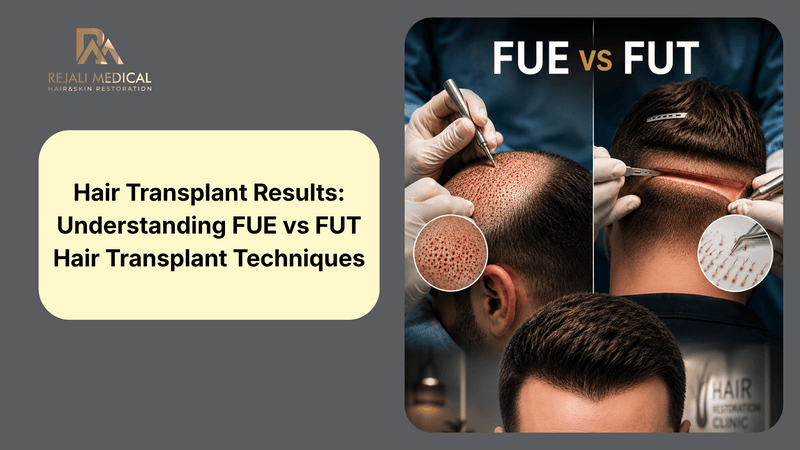
FUE, or Follicular Unit Extraction, is a hair transplant method where individual follicular units are removed one by one from the donor area. These grafts are then placed into thinning or bald areas with careful attention to angle, direction, and density.
FUE is known for being minimally invasive because it does not involve removing a strip of scalp. It leaves tiny dot-like marks in the donor area, which are usually less noticeable once healed. This makes it a popular choice for people who prefer shorter hairstyles or want to avoid a linear scar.
FUT Hair Transplant
FUT, or Follicular Unit Transplantation, is also known as the strip method. In this technique, a thin strip of scalp is removed from the donor area. The strip is then divided into individual grafts under magnification before those grafts are implanted into the recipient area.
FUT can be useful when a patient needs a larger number of grafts in one session. Since the grafts are taken from a concentrated donor strip, the method can provide strong graft yield for patients with more advanced hair loss.
In simple terms, FUE removes follicles individually, while FUT removes a donor strip and separates it into grafts.
FUE vs FUT Hair Transplant: Key Differences
The main difference between FUE and FUT is how donor hair is harvested.
With FUE, each graft is extracted individually. This usually means no linear scar and a faster return to normal activities for many patients. With FUT, a strip is removed, which leaves a linear scar that can usually be covered by surrounding hair.
Recovery may also differ. FUE often involves less donor-area tightness, while FUT may require more healing time because of the incision. That said, both methods are surgical procedures and require proper aftercare.
FUE may be preferred by patients who want shorter haircuts, smaller sessions, or less visible scarring. FUT may be preferred when a patient needs a high graft count, has good scalp laxity, or wants to maximize donor yield in one session.
Hair Transplant Results: What to Expect
Strong hair transplant results should look natural, not obvious. A natural-looking hairline depends on careful planning, correct graft placement, and realistic density goals.
Transplanted hair is typically taken from areas that are more resistant to pattern hair loss. Once the follicles settle and grow, the results are considered long-lasting. Still, existing non-transplanted hair may continue to thin over time, which is why a long-term hair restoration plan matters.
Density depends on several factors, including:
- Number of grafts placed
- Quality of donor hair
- Hair thickness and texture
- Size of the thinning area
- Future hair loss pattern
- Surgeon’s technique
A skilled hair restoration doctor does not simply fill an area with grafts. The doctor designs a plan that supports a natural hairline today and a balanced look in the future.
Hair Transplant Results Timeline
Hair transplant growth takes time. Patients should not expect final results within a few weeks.
-
Weeks 2 to 4: Shedding Phase
Many transplanted hairs shed during the first few weeks. This can worry patients, but it is a normal part of the process. The follicle remains under the skin and prepares for new growth.
-
Months 3 to 6: Initial Growth
New hair usually begins to appear around the third or fourth month. At first, the hair may look fine, thin, or uneven.
-
Months 6 to 9: Visible Improvement
Growth becomes more noticeable during this period. Hair starts to thicken, and the treated area may look fuller.
-
Months 9 to 12 and Beyond: Final Results
Many patients see strong visible results by 9 to 12 months. Some continue to see improvement up to 18 months, especially in crown areas.
FUE vs FUT Success Rate
People often ask about the FUE vs FUT success rate. In skilled hands, both techniques can produce high graft survival. Many modern hair transplant procedures report graft survival in the 90% range, although outcomes vary by patient and clinic.
Success depends on:
- Surgeon expertise
- Proper graft extraction
- Careful graft storage and handling
- Recipient site design
- Patient health
- Post-procedure care
Technique matters, but the person performing the procedure matters more.
Which Technique Delivers Better Results?
FUE and FUT can both deliver natural, long-term results. The better option depends on the patient.
FUE may be a better fit if you:
- Prefer minimal visible scarring
- Want to wear your hair short
- Need a smaller or moderate graft session
- Want a less invasive donor-area approach
FUT may be a better fit if you:
- Need a larger number of grafts
- Have advanced hair loss
- Want to preserve donor area options for future sessions
- Are comfortable with a linear scar that can be covered by hair
The best results come from a customized treatment plan, not from choosing a method based only on popularity.
Factors That Affect Hair Transplant Results
Hair transplant results vary because every patient is different. Important factors include donor hair quality, hair loss severity, scalp health, medical history, graft number, and aftercare.
Surgeon skill is one of the most important factors. Hairline design, graft placement angle, density planning, and donor management all shape the final result.
Patient expectations also matter. A hair transplant can restore coverage and improve appearance, but it cannot create unlimited density if donor hair is limited.
How to Choose Between FUE vs FUT
A proper consultation should include a scalp exam, donor-area evaluation, hair loss history, medical review, and discussion of goals.
When choosing between FUE and FUT, consider:
- How much downtime you can manage
- How short you like to wear your hair
- How many grafts you may need
- Your long-term hair loss pattern
- Your budget
- Your comfort with scarring
Personalized Hair Restoration at Dr. Rejali Hair & Skin Institute
Both FUE and FUT can provide effective, natural-looking hair transplant results when performed with the right planning and skill. The right choice depends on your hair loss pattern, donor hair, goals, and long-term needs.
Dr. Rejali Hair & Skin Institute offers advanced FUE and FUT hair transplant options in Scottsdale, Arizona, with personalized treatment planning for natural, long-lasting results. Schedule a consultation with Dr. Rejali Hair & Skin Institute to find out which technique may be right for you.
Frequently Asked Questions (FAQs)
-
Which has better results: FUE or FUT hair transplant?
Both can provide excellent results. The outcome depends more on surgeon skill, graft handling, donor hair quality, and patient aftercare than the method alone.
-
How long do hair transplant results last?
Transplanted hair is typically long-lasting because it comes from areas more resistant to pattern hair loss. Existing hair may still thin over time.
-
Is FUE less painful than FUT?
FUE is generally considered less invasive and may involve less donor-area discomfort. Pain levels vary by patient.
-
What is the success rate of FUE vs FUT hair transplant?
Both techniques can achieve graft survival in the 90% range when performed correctly, though individual results vary.
-
When will I see full hair transplant results?
Many patients see major improvement by 9 to 12 months, with some continued growth and thickening up to 18 months.