










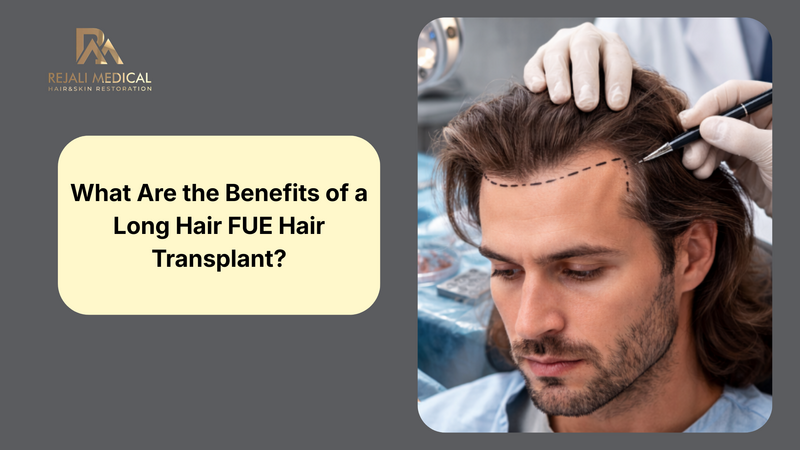
What Are the Benefits of a Long Hair FUE Hair Transplant?
Hair loss affects confidence, appearance, and even daily interactions. While hair transplant procedures have been around for decades, patient expectations have evolved. Today, people want effective hair restoration that looks natural, feels comfortable, and draws little attention during recovery. This shift in expectations has led to the growing popularity of the long hair FUE hair transplant.
Unlike traditional methods that require scalp shaving, long-hair FUE allows patients to keep their existing hair length. This makes the procedure far more discreet while still delivering reliable, long-term results. Let’s explore how long hair FUE works, its advantages, and who can benefit most from it.
Why Patients Prefer Procedures With Minimal Visibility?
One of the biggest concerns patients have about a hair transplant is how obvious it looks afterward. Shaved heads, redness, and visible scabbing can be uncomfortable, especially for individuals who work in professional or public-facing roles.
Long hair FUE addresses this concern by preserving hair length throughout the procedure. Existing hair naturally covers the treated areas, allowing patients to continue their daily routines without drawing attention. For many, this sense of privacy is just as important as the final result.
How Long Hair FUE Differs From a Traditional FUE Hair Transplant?
A traditional FUE hair transplant involves shaving the donor area and often the recipient area as well. While effective, this approach makes the procedure and recovery period highly noticeable.
With long hair FUE, the process is performed while keeping the hair intact. Each follicle is carefully extracted and implanted without trimming the surrounding hair. This approach allows surgeons to see how the transplanted hair blends with the existing hair in real time, leading to more refined, natural-looking results.
As awareness grows, more patients are choosing long hair FUE for its balance of effectiveness, discretion, and aesthetics.
How Long Does Hair FUE Work?
Step-by-Step Overview of the Procedure
The long hair FUE process follows the same principles as standard FUE, with added precision.
- The donor area is assessed without shaving.
- Individual follicles are carefully selected and extracted.
- Grafts are implanted while maintaining natural hair length.
- Hair direction, density, and flow are adjusted during placement.
Extraction and Implantation With Hair Length Intact
Keeping the hair long allows the surgeon to evaluate coverage and spacing throughout the procedure. This improves accuracy and reduces guesswork, especially in areas where density and direction are critical.
Ideal Candidates for a Long Hair Transplant
- Patients with early to moderate hair loss.
- Individuals who want discreet hair restoration.
- Men and women who prefer not to shave their hair.
- Professionals, public figures, and people with active lifestyles.
Key Benefits of a Long Hair FUE Hair Transplant
Immediate Visual Results
One of the most appealing benefits is that patients can see results right away.
- Hair density and placement are visible immediately.
- Patients can preview how the outcome will look.
- No need to wait months to assess coverage.
No Shaving Required
This technique allows patients to keep their existing hairstyle.
- No shaved patches or uneven regrowth.
- Ideal for women and working professionals.
- Helps maintain a normal appearance after the procedure.
More Accurate Graft Placement
Long hair provides surgeons with a more precise visual reference.
- Improved control over hair angle and direction.
- Better blending with existing hair.
- More natural-looking hairline and density.
Faster Return to Daily Activities
Because healing signs are less visible:
- Patients often return to work quickly.
- Social interactions feel more comfortable.
- Minimal disruption to daily routines.
Improved Confidence During Recovery
Many patients feel anxious about sudden changes in appearance.
- No drastic post-procedure look.
- Easier emotional adjustment.
- Greater confidence during the recovery phase.
Reduced Shock Factor After Surgery
Long hair naturally conceals temporary redness and scabbing.
- Less stress for first-time hair transplant patients.
- More comfortable and discreet healing process.
Long Hair FUE vs Traditional FUE Hair Transplant
Shaving Requirements
Traditional FUE requires shaving, whereas long-hair FUE preserves hair length.
Visibility of Healing
Healing is more noticeable with traditional FUE than with long-hair FUE.
Aesthetic Experience
Long hair FUE offers immediate cosmetic feedback, while standard FUE requires patience.
Cost and Session Duration
Long hair FUE typically takes longer and may cost more due to its complexity and the required expertise.
Who Should Consider a Long Hair FUE Hair Transplant?
This procedure is ideal for:
- Men and women seeking discreet hair restoration.
- Patients with thinning hair rather than complete baldness.
- Individuals who want natural density without shaving.
- Corporate professionals, actors, influencers, and public figures.
Expected Timeline and Recovery
What to Expect in the First Week
- Mild redness or sensitivity in treated areas.
- Minimal scabbing, hidden by existing hair.
- Ability to resume normal activities quickly.
When Full Growth Appears
- Transplanted hair may shed initially, which is normal.
- New growth typically begins within a few months.
- Full results develop over 9 to 12 months.
Aftercare Tips for Long Hair FUE
- Avoid pulling or aggressive brushing near grafts.
- Follow washing and care instructions carefully.
- Protect the scalp from excessive sun exposure.
Potential Limitations to Keep in Mind
While long hair FUE offers many advantages, it is not suitable for everyone.
- Longer procedure time than standard FUE.
- Higher cost due to technical demands.
- Not ideal for vast bald areas.
- Requires an experienced hair restoration specialist.
Choosing the Right Clinic for Long Hair FUE
The success of a long hair transplant depends heavily on the clinic and surgeon.
Why Experience Matters
Long hair FUE requires advanced skills and precision. Clinics with specific experience in this technique are better equipped to deliver natural results.
What to Ask During Your Consultation
- How often do you perform long hair FUE procedures?
- Am I a suitable candidate for this method?
- What results can I realistically expect?
Evaluating the Donor Area Without Shaving
Skilled clinics use specialized tools to assess donor density without cutting hair, ensuring accurate planning and optimal outcomes.
Experience Advanced Long Hair FUE Hair Transplant at Rejali Medical
Long hair FUE offers a modern, patient-focused solution for those seeking natural-looking hair restoration without visible signs of surgery. By eliminating the need for shaving and providing immediate cosmetic results, it continues to gain popularity among individuals seeking subtle yet effective outcomes.
At Rejali Medical, our team combines experience, precision, and personalized care to help patients achieve results that align with their expectations. If you are considering a hair transplant and want a discreet, professional experience, long hair FUE may be the right choice. Contact us to book your consultation and take the next step toward confident hair restoration with Rejali Medical.
Frequently Asked Questions (FAQs)
1. How long does a long hair FUE session typically take?
The session can take several hours and is often longer than a traditional FUE procedure due to the level of precision required.
2. Does long hair FUE have the same success rate as traditional FUE?
Yes. When performed by an experienced surgeon, long hair FUE offers success rates similar to those of standard FUE hair transplant procedures.
3. Can long hair FUE be used for beard or eyebrow restoration?
In some cases, yes. Suitability depends on hair characteristics and the treatment area.
4. Is long hair FUE safe for women experiencing pattern hair loss?
Yes. Women commonly choose it because it avoids the need for shaving and allows discreet treatment.
5. Can long hair FUE help cover thinning areas without full bald patches?
Yes. It is especially effective for adding density to thinning areas rather than treating advanced baldness.
1 Comment
hello world
hello world
hello world
Comments are closed.