










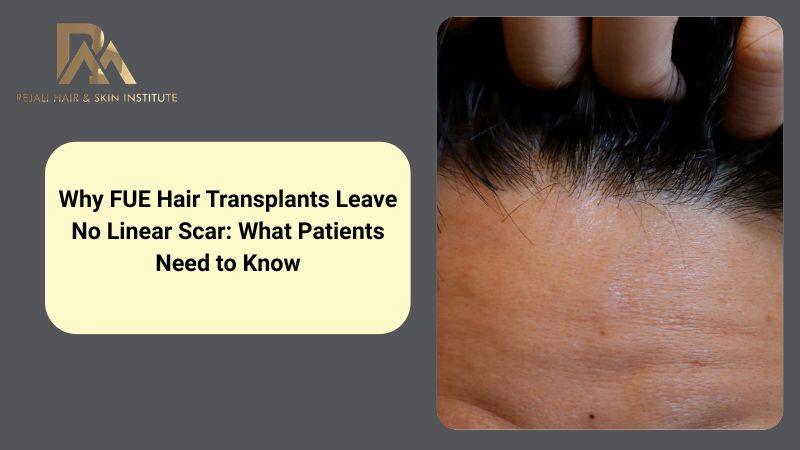
Here are the main points to remember about FUE hair transplants and scarring:
Key Takeaways
- FUE hair transplants create tiny, scattered dot scars, unlike the linear scar from FUT.
- These FUE scars are usually invisible unless the hair is shaved very short.
- The random pattern of FUE extraction sites makes them harder to spot than a single line.
- Surgeon skill and proper donor area management are key to minimizing FUE scar visibility.
- While technically not ‘scarless,’ FUE offers a virtually undetectable scarring outcome for most patients.
Understanding FUE Hair Transplants and Scarring
The Difference Between FUT and FUE Donor Sites
When you’re looking into hair transplants, you’ll hear a lot about donor areas. This is where the healthy hair follicles are taken from to be transplanted to the balding spots. The main difference in how scars are left behind comes down to how these follicles are harvested. The older method, often called FUT (Follicular Unit Transplantation) or MDEE (Microscopically Dissected Elliptical Excision), involves removing a strip of skin from the back of your head. This strip can be anywhere from 0.5 to 1.5 cm wide and quite long, depending on how many grafts are needed. Because a whole section of skin is removed, it naturally leaves a single, linear scar. Think of it like cutting a piece out of a rug – you’re left with a distinct line where the piece used to be.
FUE (Follicular Unit Extraction), on the other hand, works differently. Instead of taking a strip, individual hair follicles are extracted one by one using a tiny punch tool, usually between 0.7 and 1 millimeter in diameter. This means instead of one long cut, you end up with many tiny puncture wounds scattered across the donor area. This fundamental difference in harvesting is why FUE procedures typically result in much less visible scarring compared to FUT.
Review our previous blog on how FUE and FUT transplants differ from each other and the advantages of each technique.
Why FUE Minimizes Visible Scarring
So, why does FUE lead to less noticeable scarring? It all comes down to the size and pattern of the extraction sites. With FUT, you have that single linear scar. While it can be hidden with medium to longer hair, if you like to keep your hair very short or buzzed, that line can become quite apparent. It’s a concentrated area of scar tissue. FUE, however, creates hundreds or even thousands of tiny, pinpoint scars. These micro-scars are so small that they are often hard to see with the naked eye, even when your hair is cut short. They are also spread out randomly across the donor area, making them much more difficult for the eye to pick out than a single line. It’s like comparing a few scattered dots to one long, continuous line – the dots are just harder to spot.
Check out how the American Hair Loss Association is shifting towards scarless a approach to hair restoration.
The Reality of ‘Scarless’ Hair Transplants
Now, you might hear some clinics advertising FUE as a “scarless” procedure. It’s important to understand what that really means. Technically, any time the skin is punctured or cut, there will be some form of scarring. So, no hair transplant procedure is truly “scarless.” However, FUE comes very close to being undetectable. The tiny punch sites heal into small, white dots that are usually hidden by surrounding hair. The key is that these scars are so minimal and scattered that they are virtually invisible to anyone who isn’t specifically looking for them, especially when compared to the linear scar left by FUT. It’s more about making the scars undetectable rather than completely non-existent. Proper donor area management is key to avoiding noticeable scarring.
The goal of FUE is to harvest hair follicles in a way that leaves behind minimal, scattered micro-scars. While not technically “scarless,” the resulting marks are typically so small and dispersed that they are practically invisible, even with very short hairstyles. This is a significant advantage over older techniques that leave a single, linear scar.
The FUE Hair Transplant Procedure: A Closer Look
Individual Follicle Extraction Explained
Follicular Unit Extraction, or FUE, is a method where individual hair follicles are taken from a donor area, usually the back and sides of your head where hair is naturally thicker and less prone to thinning. Think of it like harvesting tiny, individual plants rather than digging up a whole section of garden. Each follicle is carefully removed using a small, circular tool. This is a meticulous process, and it’s done one by one. The goal is to get healthy follicles that will grow new hair in the areas where it’s thinning.
How Tiny Punch Sites Heal
After each follicle is extracted, it leaves behind a very small, dot-like opening. These are called punch sites. Because they are so small and scattered across the donor area, they don’t form a continuous line like you might see with older methods. Your body’s natural healing process kicks in quickly. These tiny sites typically close up and heal within a few days to a week. You might notice some redness or tiny scabs initially, but as your hair grows back, these spots become virtually invisible. It’s pretty amazing how the body can repair itself so effectively.
What to Expect During Recovery
Recovery from an FUE transplant is generally much easier than people expect. Most patients can go back to their normal daily activities pretty quickly. You’ll likely experience some redness and maybe mild swelling in the donor and recipient areas for the first few days. Some minor scabbing is also normal. It’s important to follow your surgeon’s aftercare instructions carefully to help the healing process along and to protect the newly transplanted grafts. You’ll need to be a bit gentle with the area for a while, but there are no stitches or large wounds to worry about, which makes a big difference. Many people find they can return to work within a couple of days, especially if their job isn’t physically demanding. Remember, proper aftercare is key for optimal healing and regrowth, though temporary side effects like redness and mild discomfort may occur. This minimally invasive procedure offers a permanent solution for hair loss.
Why FUE Hair Transplants Leave No Linear Scar
When people talk about hair transplants, one of the first things that comes to mind is scarring. Specifically, the linear scar left behind by the older FUT (Follicular Unit Transplantation) method. It’s a big concern for many, and understandably so. But FUE, or Follicular Unit Extraction, is a different story. It’s designed to avoid that tell-tale line across the back of your head.
Avoiding the Strip Scar of FUT
The FUT procedure involves removing a strip of scalp from the donor area. Think of it like cutting out a piece of a puzzle. This strip is then dissected under a microscope to separate individual hair follicles. While it can yield a lot of grafts in one go, the main drawback is the resulting linear scar. This scar can be quite noticeable, especially if you like to wear your hair short. It’s a permanent reminder of the procedure, and sometimes, it can even widen over time if the scalp is tight or the closure wasn’t perfect.
The Random Pattern of FUE Extraction Sites
FUE works differently. Instead of a strip, individual hair follicles are extracted one by one directly from the donor area using tiny, circular punches. Imagine picking out individual grains of rice instead of cutting out a whole scoop. Each extraction site is minuscule, typically less than 1 millimeter in diameter. Because these tiny punch sites are scattered randomly across the donor area, they blend in much more easily with the surrounding hair. This random distribution is key to why FUE scars are so hard to detect. Even with a shorter haircut, these pinpoint scars are usually invisible to the naked eye. It’s not truly “scarless,” as any puncture will create a micro-scar, but the visual impact is dramatically reduced compared to a linear scar. This is a major reason why many opt for FUE hair transplants.
Styling Freedom After FUE
What does this mean for you? It means a lot more freedom. With FUT, you often need to keep your hair at a certain length to cover that linear scar. With FUE, you can typically wear your hair as short as you like, even buzzed, without worrying about revealing the donor area. This is a huge advantage for many patients who want a natural look without the visible signs of surgery. The ability to style your hair freely is a significant benefit that sets FUE apart from older hair transplant methods.
Here’s a quick look at the difference:
Feature
FUT (Strip Method)
FUE (Extraction Method)
Donor Area Scar
Linear scar (1-3 inches long)
Tiny, scattered dots (less than 1mm each)
Visibility with Short Hair
Often visible
Generally invisible
Styling Restriction
May require longer hair to conceal
Minimal to none
While FUE avoids the linear scar, it’s important to remember that it still involves creating small wounds. The success in making these scars virtually undetectable relies heavily on the surgeon’s technique and how well the donor area is managed. Over-harvesting or poor technique can still lead to noticeable thinning or scarring, even with FUE.
Choosing FUE means you’re opting for a method that prioritizes a discreet donor area, allowing for more styling flexibility and a less obvious surgical history. It’s a significant step forward in hair restoration.
Factors Influencing FUE Scar Visibility
Even though FUE hair transplants are known for leaving minimal scarring, it’s not always a guarantee that the scars will be completely invisible. Several things play a role in how noticeable those tiny extraction points might be. It’s good to know about these factors so you can have realistic expectations.
The Role of Surgeon Skill and Technique
This is probably the biggest one. A surgeon’s experience really matters. They need to know how to use the right tools and techniques to minimize damage to the scalp. This includes:
- Punch size selection: Using the smallest effective punch size for extraction. Smaller punches mean smaller wounds.
- Extraction pattern: Spreading out the extractions randomly across the donor area. This prevents clusters of tiny scars that can look like a patch of thinning.
- Depth of extraction: Not going too deep, which can damage surrounding tissue and affect healing.
A skilled surgeon aims to make each extraction site as clean and precise as possible. If the technique isn’t quite right, or if too many follicles are taken from one spot, the scars can become more apparent. It’s why choosing a reputable clinic is so important.
Understanding Donor Area Management
Proper management of the donor area is key to avoiding visible scarring. This means the surgeon needs to be smart about how many grafts they take and where they take them from. They have to consider the density of your existing hair and how much can be removed without creating a noticeable thinning effect.
- Graft count limits: Not exceeding a safe number of grafts per session to maintain donor density.
- Safe donor zone: Primarily harvesting from the sides and back of the head where hair is genetically programmed to last.
- Future procedures: Planning ahead to ensure enough donor hair is available for potential future transplants.
Overharvesting from a single area, even with FUE’s tiny dots, can lead to a patchy or ‘moth-eaten’ appearance that’s hard to hide, especially with shorter hairstyles. It’s about balance and preserving the donor area’s natural look.
How Skin Tone and Healing Play a Part
Your body’s natural healing process and your skin type also influence how scars appear. Some people just heal with less noticeable marks than others. If you’re prone to thicker scars or have a darker skin tone, you might notice the FUE dots more.
- Skin tone: Darker skin tones can sometimes show lighter or darker spots where the extractions occurred (hypopigmentation or hyperpigmentation).
- Healing response: Individual healing varies; some people develop minor redness or slight textural changes that fade over time.
- Genetics: Your genetic makeup influences how your skin repairs itself. If you tend to form keloids or hypertrophic scars from other injuries, you might be at a higher risk, though this is less common with FUE.
It’s worth discussing your personal healing history with your surgeon. Knowing if you’re prone to certain types of scarring can help set expectations and guide the surgical plan. For many, the tiny scars are virtually undetectable, especially if you keep your hair at a moderate length, but understanding these factors helps explain why results can differ from person to person. If you’re considering FUE, looking into long hair FUE options might be a good idea if you want to keep your hair longer during recovery.
Advanced FUE Techniques for Minimal Scarring
While standard FUE is already a big step up from older methods when it comes to scarring, there are even more refined techniques out there. These advanced approaches focus on minimizing trauma to the donor area even further, making those tiny punch sites practically disappear.
Beyond Standard FUE: Specialized Methods
Some clinics are taking FUE to the next level with specialized tools and techniques. Think of it like using a precision scalpel versus a regular knife. These methods often involve:
- Controlled Depth Extraction: Instead of just punching down, these techniques carefully control how deep the punch goes. The goal is to extract the follicle without disturbing surrounding tissues more than absolutely necessary. This means less overall trauma to the scalp.
- Ultra-Fine Punch Tools: The diameter of the punch tool is a big factor in scar size. Advanced techniques often use punches that are smaller than the standard 0.7-1.0 mm, sometimes as small as 0.5 mm. This creates even tinier entry points.
- Automated Extraction Devices: While not always about minimizing scars, some automated FUE devices can offer consistency and speed, which can indirectly help by reducing the time the scalp is manipulated.
Minimizing Depth and Punch Size
The core idea behind these advanced methods is simple: less invasion equals less scarring. By using smaller punch sizes and carefully controlling the extraction depth, surgeons can significantly reduce the micro-trauma to the donor area. This means the tiny dots that form after extraction are smaller and heal more cleanly. For patients who like to keep their hair very short, this level of refinement is key to maintaining a natural look in the donor zone. It’s about preserving the donor area’s density and appearance for the long term, which is important for future procedures if needed.
When FUE Excels Over FUT
It’s clear that FUE, especially with these advanced techniques, has a major advantage over the older FUT (strip) method when it comes to scarring. FUT leaves a single, linear scar that can be quite noticeable, especially with shorter hairstyles. FUE, on the other hand, scatters tiny, dot-like scars across a wider area. This makes them much harder to spot, even if you prefer a buzz cut. The random pattern of FUE extraction sites, combined with the minimal depth and small punch size of advanced techniques, means that the donor area looks much more natural and less ‘operated on’ compared to the tell-tale line left by FUT.
The goal of advanced FUE is to make the donor area look as untouched as possible, even under close inspection. This involves a combination of meticulous technique, specialized tools, and a deep understanding of scalp anatomy.
Can FUE Hair Transplant Scars Be Completely Avoided?
It’s a question many people ask when considering a hair transplant: can you really have the procedure done and end up with absolutely no scars? The honest answer is that any surgical procedure, including FUE hair transplants, involves some level of cutting the skin, which naturally leads to scarring. However, the key difference with FUE is the type and visibility of those scars.
The Inevitability of Micro-Scarring
While FUE doesn’t leave that single, long linear scar associated with older FUT (strip) methods, it’s not entirely “scarless.” Each individual follicular unit is extracted using a tiny punch tool, typically between 0.8mm and 1.0mm in diameter. This process does create very small puncture wounds. Think of it like a very, very small pinprick. Over time, these tiny sites heal and form microscopic scars. These micro-scars are the reality of FUE, but their small size and scattered nature are what make them so much less noticeable.
Making Scars Virtually Undetectable
So, if complete avoidance isn’t possible, how do we make these scars practically invisible? It comes down to a few factors:
- Surgeon’s Skill: A highly experienced surgeon uses precise techniques and the smallest appropriate punch sizes, minimizing trauma to the donor area. They also strategically plan the extraction pattern to avoid clustering.
- Donor Area Management: How many grafts are taken and from where is critical. A conservative approach preserves enough density so that the extracted areas blend in naturally with surrounding hair.
- Hair Length: For most patients, keeping the hair at a moderate length (e.g., a number 2 or 3 buzz cut) is usually enough to completely conceal the tiny FUE dots. Even shorter styles can often work, depending on your hair’s natural density and color.
- Healing Process: Individual healing varies. Some people naturally heal with less visible scarring than others.
While advertisements might tout “scarless” procedures, it’s more accurate to say FUE results in minimally visible scarring. The goal is to make these marks undetectable to the casual observer, allowing you the freedom to style your hair as you wish.
When to Consider Scar Revision
In rare cases, even with FUE, some individuals might find their scars more noticeable than they’d like. This could be due to factors like an unusual healing response, a very large number of grafts extracted, or keeping the hair extremely short (like a shaved head). If you’re concerned about the visibility of your FUE scars, there are options:
- Scalp Micropigmentation (SMP): This is a cosmetic tattooing technique that can create the illusion of density and camouflage scars by mimicking the appearance of tiny hair follicles. It’s a popular and effective solution for both FUE and FUT scars.
- FUE into Scar Tissue: In some instances, additional FUE grafts can be transplanted directly into the scar tissue itself to help break up the appearance of the scar and improve density.
- Combining Techniques: Often, a combination of SMP and FUE scar revision provides the best results for making scars virtually undetectable. Discussing your specific situation with a specialist can help determine the most suitable approach for achieving your desired outcome.
Wondering if FUE hair transplant scars can be completely hidden? While FUE is known for its minimal scarring, it’s not always possible to avoid them entirely. Tiny dots might be visible if you shave your head very short. Want to learn more about minimizing scars and achieving natural-looking results? Visit our website to explore your options and book a consultation!
Conclusion
So, while no surgical procedure is completely without any mark, FUE hair transplants come remarkably close to being ‘scarless’ for all practical purposes. The tiny dot-like scars are a world away from the linear scar left by FUT. This means you get the hair restoration you want without the tell-tale sign that often accompanies it. If you’re looking to regain your hair and your confidence, FUE is definitely worth considering for its minimal scarring and the freedom it offers.
Frequently Asked Questions
What’s the main difference between FUT and FUE scars?
Think of FUT like cutting a whole slice of cake – it leaves one long cut mark, a linear scar. FUE is more like taking out individual sprinkles; it leaves tiny little dots scattered around. The FUT scar is a single line, while FUE scars are many tiny dots.
Can I really have an FUE hair transplant with no visible scar?
It’s not totally ‘scarless’ because the skin is poked to get the hair. But the holes are super small, like pinpricks. Most people can’t see them at all, especially if they keep their hair at a normal length or a bit longer. It’s very, very hard to notice.
Why does FUE leave smaller scars than FUT?
FUE takes out hair one by one using a tiny tool. FUT cuts out a whole strip of skin. So, FUE just leaves little marks where each hair was taken. FUT leaves a bigger line where the whole strip was removed.
Will I be able to wear my hair short after an FUE transplant?
Yes, usually! Because the FUE scars are so small and spread out, most people can get their hair cut pretty short, even a buzz cut, and the scars are almost impossible to see. You don’t have to worry about hiding a big line.
Does the surgeon’s skill matter for FUE scarring?
Absolutely. A skilled surgeon knows how to spread out the extraction points so they aren’t too close together. They also use the right size tools. If too many hairs are taken from one spot, or the surgeon isn’t careful, the dots might be more noticeable.
What if I already have a scar from an old FUT surgery?
There are things that can be done! Sometimes, FUE can be used to transplant hairs right into the old scar area to help cover it. Other options include something called scalp micropigmentation, which is like a tattoo that makes the scar look like hair follicles. So, even old scars can often be improved.