










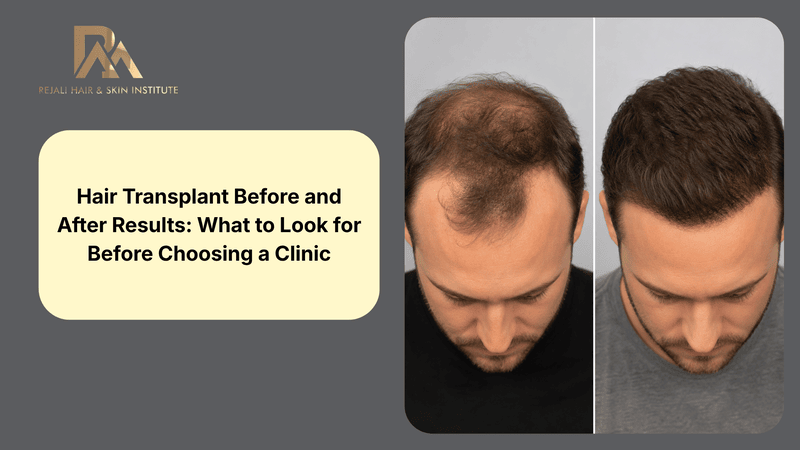
Hair Transplant Before and After Results: What to Look for Before Choosing a Clinic
Before and after photos can be one of the most useful ways to judge a hair transplant clinic. They help you see the quality of results, the naturalness of the hairline, and how well the clinic handles different types of hair loss.
At the same time, not every before and after photo tells the full story. Some photos may use flattering lighting, angles, styling, or camera tricks that make the results look better than they are. Others may show only the best cases without explaining the patient’s starting point, donor hair quality, timeline, or treatment plan.
If you are considering a hair transplant in Scottsdale, learning how to evaluate before and after results can help you make a more confident decision.
Why Hair Transplant Before and After Results Matter
A hair transplant is a long-term decision. The goal is not only to add hair but to create a result that looks natural with your face, age, hair type, and future hair loss pattern.
The American Academy of Dermatology explains that hair transplant surgery moves healthy hair from one part of the scalp to areas with thinning hair, and modern techniques can produce natural-looking results when performed properly.
Before and after photos give you a visual way to understand:
- How natural the hairline looks
- How well the transplanted hair blends with existing hair
- How much density was achieved
- How the crown or hairline changed over time
- How consistent the clinic’s results appear across different patients
- Whether the results match the type of outcome you want
These photos should not be the only factor in choosing a clinic, but they are an important place to start.
Look for Natural Hairline Design
One of the biggest signs of a good hair transplant result is a natural hairline.
A natural hairline should not look too straight, too low, too sharp, or too dense in a way that feels artificial. Real hairlines have small variations. They are not perfect lines.
When reviewing before and after photos, look closely at:
- The shape of the hairline
- The placement of the frontal hairline
- The angle and direction of the transplanted hairs
- How softly the new hairline frames the face
- Whether the result looks age-appropriate
A hairline that looks good today should also make sense years from now. An overly aggressive hairline may seem appealing at first, but it may look unnatural if hair loss continues behind it.
Check the Density, But Keep Expectations Realistic
Many patients want thick, full hair after a transplant. That is understandable. However, good results are not always about creating maximum density everywhere.
A natural-looking result depends on smart planning. The clinic has to consider donor hair availability, future hair loss, hair thickness, hair color, scalp contrast, and the size of the thinning area.
When looking at photos, ask yourself:
- Does the hair look fuller without looking fake?
- Does the density match the patient’s overall hair type?
- Does the result blend naturally with surrounding hair?
- Is the improvement realistic based on the starting point?
Some patients may need more than one session to reach their desired density. A trustworthy clinic should be clear about what one procedure can and cannot achieve.
Pay Attention to Lighting, Angles, and Styling
Before and after photos should be fair and consistent. If the “before” photo is taken under harsh lighting and the “after” photo is taken in softer lighting, the result may look more dramatic than it really is.
Compare these details:
- Is the lighting similar in both photos?
- Is the angle the same?
- Is the hair wet in one photo and dry in the other?
- Is the hair styled differently?
- Is the patient’s hair length similar?
- Is the background or camera distance consistent?
A clinic that uses clear, consistent photos is usually more transparent. You should be able to see the actual improvement without relying on perfect styling or editing.
Look for Multiple Angles
One front-facing photo is not enough. Hair transplant results should be shown from several angles, especially when evaluating the hairline, temples, crown, and overall density.
Helpful before and after photos may include:
- Front view
- Side view
- Hairline close-up
- Top view
- Crown view
- Donor area view
- Wet hair or comb-through view when appropriate
The more complete the photo set, the easier it is to judge the real outcome.
Review Results That Match Your Hair Loss Pattern
Not all hair loss is the same. A patient with a receding hairline has different needs than someone with crown thinning or diffuse thinning.
When reviewing a clinic’s gallery, look for cases similar to yours.
For example:
- If you have a receding hairline, focus on hairline restoration photos.
- If your crown is thinning, look for crown transplant cases.
- If you have advanced hair loss, look for cases with larger restoration plans.
- If you have curly, fine, or coarse hair, look for similar hair types.
- If you are a woman with thinning hair, look for female hair restoration examples.
This matters because a clinic may show strong results in one type of case but have limited examples for your specific concern.
Ask How Long After Surgery the “After” Photo Was Taken
Hair transplant results take time. The final result does not appear immediately after the procedure.
After a transplant, it is common for transplanted hairs to shed before new growth starts. New growth usually appears gradually, and the final look may take many months to develop. Many patient education sources explain that full results commonly take around 12 months or longer, depending on the individual and procedure type.
When reviewing results, ask:
- Was the after photo taken at 6 months, 9 months, 12 months, or later?
- Is this the final result or a progress update?
- Did the patient have one session or more than one?
- Were PRP or other treatments used along with the transplant?
A 6-month result should not be judged the same way as a 12-month or 18-month result.
Check the Donor Area
The donor area is usually the back or sides of the scalp, where healthy follicles are taken for transplantation. A good result should not only look good in the recipient area. The donor area should also heal well and maintain a natural appearance.
When reviewing photos, look for:
- Visible scarring
- Uneven thinning in the donor area
- Overharvesting
- Patchy areas
- Natural blending after healing
This is especially important for patients who like to wear their hair short.
Understand the Difference Between FUE and FUT Results
Two common hair transplant methods are FUE and FUT.
FUE usually involves removing individual follicular units from the donor area. FUT involves removing a strip of tissue from the donor area and then separating it into grafts. Both methods can produce natural-looking results when done well, but they differ in how the donor hair is harvested and how the donor area heals.
The American Society for Dermatologic Surgery lists hair transplantation as a dermatologic surgery option for hair restoration, and medical literature describes modern hair transplantation as based on follicular unit transplantation, where follicular units are used as grafts.
When reviewing before and after photos, ask which method was used and why it was chosen for that patient. The right method depends on your hair loss pattern, donor hair, styling preferences, and long-term goals.
Look for Results That Age Well
A good hair transplant plan should consider future hair loss. This is especially important for younger patients or anyone with progressive pattern hair loss.
A hairline that is too low or too dense may use too many grafts in the front and leave fewer options if thinning continues later. A thoughtful plan protects donor hair and creates a result that can still look natural over time.
Before choosing a clinic, ask:
- How will my hair loss likely progress?
- Is my donor area strong enough for future needs?
- Is my hairline design age-appropriate?
- Will I need medical treatment to help protect existing hair?
- Could I need another procedure later?
Before and after photos are helpful, but the planning behind the result matters just as much.
Watch for Overly Perfect or Edited Photos
Be careful with photos that look too polished or unrealistic. Hair transplant results can be impressive, but no clinic should rely on edited images or unclear comparisons.
Possible red flags include:
- Different lighting in before and after photos
- Heavy styling in the after photo
- No close-up images
- No timeline listed
- No mention of the number of grafts
- No donor area photos
- Only a few hand-picked results
- Photos that appear filtered or retouched
A trustworthy result should still look good in simple, honest photos.
Ask About the Number of Grafts
The number of grafts used can help you understand the scale of the procedure. A small hairline refinement may require fewer grafts than a larger restoration for the front and crown.
When reviewing a case, ask:
- How many grafts were used?
- Which areas were treated?
- Was the result achieved in one session?
- Was the crown treated or only the hairline?
- Was the patient also using non-surgical treatment?
This context helps you compare results more fairly. A dramatic transformation may have involved more grafts, more than one procedure, or additional therapies.
Look for Consistency Across Many Cases
One good result is not enough. A clinic should be able to show consistent results across different patients, hair types, and hair loss patterns.
Look for variety in the gallery:
- Different ages
- Different stages of hair loss
- Different hair types
- Hairline and crown cases
- Men and women, if relevant
- FUE and FUT cases, if both are offered
Consistency shows experience. It also gives you a better idea of what the clinic may be able to do for your case.
Ask to See Results During Your Consultation
Online photos are useful, but a consultation gives you the chance to ask more detailed questions.
You can ask:
- Can I see results from patients with hair loss similar to mine?
- What timeline should I expect?
- How many grafts might I need?
- What kind of density is realistic?
- What will my donor area look like after healing?
- Do I need PRP or medication before or after surgery?
- Am I a good candidate for a hair transplant now?
A good consultation should feel educational. You should leave with a clear understanding of your options, not pressure to book right away.
What to Look for in a Hair Transplant Clinic
Before and after photos are important, but they should be part of a larger decision.
When choosing a clinic, consider:
- Experience with your type of hair loss
- Natural-looking hairline design
- Clear explanation of FUE, FUT, or other options
- Honest discussion of limitations
- Transparent graft planning
- Personalized treatment recommendations
- Strong post-procedure instructions
- Clear recovery expectations
- Realistic before and after photos
- No pressure-based sales tactics
A hair transplant is both a medical procedure and an aesthetic decision. The clinic should understand both sides.
Hair Transplant Results in Scottsdale: Why Local Consultation Matters
If you are looking for a hair transplant in Scottsdale, an in-person consultation can help you get a more accurate plan. Photos alone cannot show scalp health, donor hair strength, hair miniaturization, or the full pattern of thinning.
During a consultation, a specialist can examine your scalp, review your goals, and explain what type of result is realistic for you. This is also the right time to ask about hairline design, graft count, recovery, aftercare, and long-term planning.
A strong hair transplant plan should not be based only on what looks good in a photo. It should be based on your hair, your face, your donor area, and your future hair loss risk.
The Bottom Line
Hair transplant before and after results can tell you a lot about a clinic, but only if you know what to look for. Focus on natural hairline design, realistic density, consistent lighting, multiple angles, donor area appearance, and cases that match your own hair loss pattern.
The best results should look natural, balanced, and age-appropriate. They should also come with clear context, including the number of grafts, the procedure type, and the timeline of the after photo.
If you are considering a hair transplant in Scottsdale, schedule a professional consultation to review your hair loss pattern, donor hair, and treatment options. The right plan can help you understand what is possible and choose a result that looks natural for the long term.
FAQs
-
Are hair transplant before and after photos reliable?
Yes, but only if the lighting, angles, and hair length are similar in both photos.
-
How long does it take to see final hair transplant results?
Most patients see fuller results in about 12 months, though growth starts earlier.
-
What should I check in before and after photos?
Look at the hairline, density, donor area, photo angles, and how natural the result looks.
-
Why do some hair transplants look unnatural?
This can happen when the hairline is too low, grafts are placed poorly, or the result is overdone.
-
Can photos tell me if I am a good candidate?
No. Photos can guide expectations, but a consultation is needed to check your hair loss and donor hair.