










Here’s a quick rundown of what to expect during your FUE hair transplant recovery. This timeline helps you understand the healing process and the exciting stages of new hair growth.
Key Takeaways
- Visible healing of the scalp usually happens within the first 1-2 weeks.
- Expect transplanted hairs to shed between weeks 3-4, often called ‘shock loss’.
- New hair growth typically starts to appear around months 3-4, initially as fine hairs.
- By months 9-12, you’ll see significant growth and density, getting close to the final result.
- Follow your surgeon’s aftercare instructions closely for the best possible outcome.
The Immediate Aftermath: Day One to Day Seven
Initial Post-Procedure Care and Comfort
The first week after your FUE hair transplant is all about letting those newly placed grafts settle in and begin their healing journey. You’ll likely feel some tightness and tenderness in your scalp, which is completely normal. Keeping the recipient area hydrated is key during these initial days. Your surgical team will probably give you a saline spray to use frequently, especially while you’re awake. This helps keep the grafts moist and reduces crusting. It’s also important to sleep with your head elevated, usually on your back with a few extra pillows or in a recliner, to minimize swelling and protect the transplanted area. Don’t be alarmed by a bit of redness or minor oozing; these are typical signs of healing.
Remember, the goal for the first 7-10 days is to protect the grafts from dislodgement, infection, and drying out. Every instruction from your clinic is designed to support this critical phase.
Gentle Washing and Graft Protection
Around day 5, you’ll likely get the green light to start gently washing your scalp. This isn’t your usual vigorous shampooing session. Think soft, lukewarm water and a mild, fragrance-free baby shampoo. You’ll want to use your palms to gently pat or tap the shampoo onto your scalp – absolutely no rubbing or using your fingernails. The idea is to clean the area without disturbing the delicate grafts that are still anchoring themselves. Daily washing from this point on is usually recommended until all scabs have naturally fallen off. The donor area, where the hair was taken from, will also need care, though it typically heals faster. You might notice some temporary thinning there, which is a normal part of the process.
Returning to Light Activities
Most people can resume light, non-strenuous activities within the first week. This might include short walks or returning to desk-based work. However, it’s crucial to avoid anything that significantly raises your heart rate or blood pressure, like intense exercise or heavy lifting. Increased blood flow to the scalp during strenuous activity could potentially dislodge the grafts before they’re firmly set. You’ll also want to avoid direct sun exposure and wear a loose-fitting hat if you need to go outside. By the end of this first week, the initial swelling should be subsiding, and you’ll start to see scabs forming, which is a sign that healing is progressing well. Most patients feel comfortable returning to non-strenuous office work around day 7-10.
Navigating the First Two Weeks: Healing and Early Changes
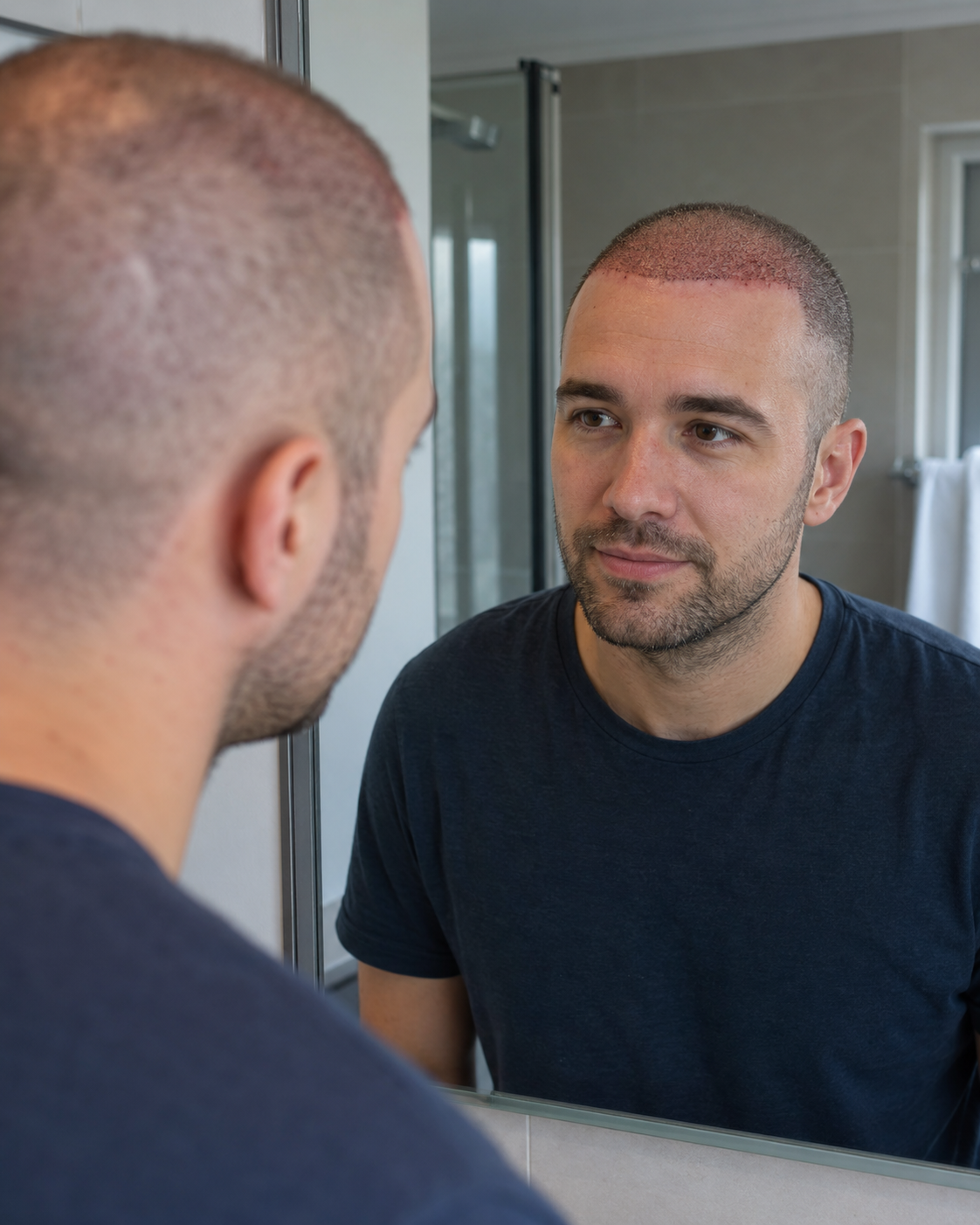
So, you’ve made it through the first week. That’s a big deal! Now, as you move into weeks two, things start to shift a bit. You’re likely seeing some changes on your scalp, and it’s important to know what’s normal and what might need a closer look. This period is all about the healing process really kicking into gear and preparing you for what’s next.
Scab Formation and Shedding
By now, you’ve probably noticed scabs forming around the transplanted hairs. This is a totally normal part of the healing process. Think of them as little protective shields for the new grafts. As your scalp continues to heal, these scabs will start to loosen and naturally fall off, especially as you begin gentle washing as instructed by your clinic. It’s really important not to pick at them, even if they feel itchy. Let them do their thing and come off on their own. Sometimes, you might see tiny hairs mixed in with the scabs when they come off – don’t panic, this is usually just the hair shaft detaching, while the follicle stays put, ready to grow.
- Gentle washing is key: Use a mild shampoo and lukewarm water.
- Avoid friction: Don’t rub or scrub the scalp.
- Patience is a virtue: Let scabs detach naturally.
Donor Area Recovery
The donor area, where the hair was taken from, usually bounces back pretty quickly. With FUE, the tiny extraction sites are quite small, and they tend to fade and become less noticeable as the days go by. You might still feel a bit of tightness or tenderness there, which is also normal. Most people find that by the end of the second week, the donor area looks much improved and is much less obvious. If you had FUT hair transplant, the linear scar might take a bit longer to feel completely comfortable, but it should still be healing well.
Understanding the ‘Ugly Duckling’ Phase
This is where things can get a little… interesting. After the initial healing and scabs start to disappear, you might notice that the transplanted hairs begin to shed. This is often called the ‘ugly duckling’ phase, and it can catch people off guard. It’s crucial to remember that this shedding is a normal part of the hair growth cycle, not a sign that the transplant failed. The follicles are still there, just resting beneath the surface before new growth begins. It might look a bit sparse for a while, but this temporary phase is a necessary step before the real growth starts, usually around the 3-4 month mark. It’s a good time to focus on protecting your scalp from the sun, as it can be more sensitive during this period.
The first few weeks after a hair transplant are a mix of healing and anticipation. While you might see scabs and then shedding, these are all normal steps. The real magic happens later, so hang in there and trust the process.
Weeks Three and Four: The Shedding Phase
Okay, so you’ve made it through the first couple of weeks, and things might be starting to look a bit more normal. But hang in there, because weeks three and four are when things can get a little… weird. This is often called the “shedding phase,” and it’s totally normal, even though it can feel a bit alarming.
Experiencing ‘Shock Loss’
This is the part where you might see a lot of the transplanted hairs actually fall out. Seriously, it can look like the procedure didn’t work at all, and that’s a tough pill to swallow. But here’s the deal: the hair shaft you see falling out is usually just that – the shaft. The actual follicle, the tiny root system under your skin, is typically still there and just getting ready for its next growth cycle. It’s a bit like a reset button for the transplanted hair. This shedding can affect a good chunk of the transplanted hairs, sometimes 70-80% or even more, depending on the person. It’s a common part of the FUT hair transplant recovery process.
It’s not just the new hairs, either. Sometimes, the hair you already had near the transplant area can also shed a bit. This is called “shock loss” in your native hair. It can happen because of the stress the surgery puts on the surrounding area. For most people, this is temporary, and your original hair will grow back. However, if you’re already dealing with significant hair loss, it’s something to discuss with your doctor.
Calm Scalp and Continued Healing
While the shedding might be making you anxious, your scalp itself should be feeling much calmer. Most of the initial redness should be fading, and any lingering scabs should be gone. You might notice some small bumps or even a pimple or two popping up. This can happen as the new hairs start to push their way out from under the skin, or as your pores clear up. Just try not to pick at them – that can cause irritation and mess with the healing. Your skin is still settling down, and this is a sign that things are moving along.
It’s important to remember that shedding is not the same as losing the grafts. The follicles are designed to stay put, and the visible hair is just the first part of the cycle. The real magic happens months down the line.
Protecting Your Scalp from the Sun
Now that your scalp is starting to look more normal, you need to be extra careful about sun exposure. The skin in the recipient area is still sensitive, and getting too much sun can cause it to discolor or just generally slow down healing. Think of it like a sunburn on a fresh scar – not ideal. So, what’s the plan?
- Wear a hat: A loose-fitting hat is your best friend. Avoid anything too tight that might rub against the scalp. A wide-brimmed hat is perfect.
- Seek shade: When you’re outside, try to stay in the shade as much as possible, especially during peak sun hours.
- Sunscreen (later): Your doctor will tell you when it’s safe to start using sunscreen on the area, but for now, physical barriers like hats are better.
Being diligent about sun protection now will really pay off in the long run for the health of your scalp and the appearance of your new hair. If you’re considering a beard hair transplant, similar sun protection rules apply to that area too. Remember, patience is key during this phase; the growth you’re waiting for is just getting started beneath the surface.
The Patience Window: Months One to Three

So, you’ve made it through the initial healing and the shedding phase. Now what? Welcome to months one through three post-hair transplant, often called the ‘patience window.’ It might feel a bit quiet on the scalp front, and that’s totally normal. You’re likely not seeing much in the way of new hair yet, and the scalp might still have a bit of lingering redness or sensitivity. This is the time when those transplanted follicles are doing their behind-the-scenes work, getting ready for the big show.
The Dormancy Period for Grafts
Right now, the transplanted hairs you saw fall out in the previous weeks? They’re gone, but the follicles are still very much alive and kicking under the skin. Think of it like planting seeds; they need time to rest and gather strength before they sprout. Most of the follicles are in a resting phase, also known as the telogen phase. This is a natural part of the hair growth cycle. It can feel a little anticlimactic after the surgery, but this dormant period is absolutely essential for healthy, long-term growth. It’s during these months that the follicles are establishing a strong foundation for the new hair that will eventually emerge. You might notice some fine, vellus hairs starting to appear, which are like the very first tiny sprouts. They might be lighter in color or have a different texture than your original hair, and that’s perfectly fine.
Lingering Redness and Sensitivity
It’s not uncommon for some redness to stick around for a while, especially if you had a larger procedure or have a naturally fair complexion. This is just your skin continuing to heal and calm down. You might also experience some mild sensitivity or occasional itching as everything settles. It’s important to be gentle with your scalp during this time. Avoid any harsh scrubbing or applying too much pressure. If you’re concerned about the redness, your surgeon can offer advice or suggest specific products to help soothe the area. Remember, everyone heals at their own pace, and what you’re experiencing is likely within the normal range for this stage of recovery. You can find more information on what to expect after your procedure on hair restoration websites.
Preparing for New Growth
While you wait for the visible signs of growth, there are a few things you can do to support your scalp and prepare for what’s to come. Gentle scalp massages, if recommended by your surgeon, can help improve blood flow. Continuing to follow a healthy lifestyle with good nutrition also plays a role in overall hair health. Some people find that styling their existing hair can help camouflage any thinning areas while they wait for the transplanted hair to grow. A slightly longer haircut around the recipient area can often blend things nicely. It’s also a good time to think about sun protection. Your scalp is still sensitive, so wearing a hat outdoors or using a gentle sunscreen is a smart move to prevent any sun damage. This phase is all about patience and trusting the process. The real magic starts to happen in the months ahead.
The Emergence of New Hair: Months Three to Six
Alright, so you’ve made it through the initial healing and the sometimes-weird shedding phase. Now, things start to get really interesting. Between months three and six after your FUE hair transplant, you’ll likely begin to see the first real signs of new growth. It’s a pretty exciting time, honestly.
First Signs of New Hair Growth
This is when the mirror starts becoming your friend again. You might notice fine, new hairs starting to poke through the scalp. These initial hairs are often thinner and lighter in color than your permanent hair will eventually be, and they might not grow in a perfectly straight line at first. Think of it like a seedling pushing through the soil – it’s delicate and a bit unpredictable. It’s also common for this growth to appear patchy. Remember, each follicle wakes up on its own schedule, so some areas might show progress before others. This is totally normal and part of the process.
- Texture: Expect new hairs to be fine, almost like vellus hair.
- Color: They might be lighter than your natural hair color.
- Direction: Some hairs may stick out at odd angles initially.
- Density: Growth will be sparse and uneven at this stage.
This period is often called the ‘awakening’ phase for your transplanted follicles. While it might not look like a full head of hair yet, it’s a strong indicator that the grafts are healthy and working.
Building Density and Confidence
As you move from month four to month six, the growth should become more noticeable. The hairs will start to thicken up a bit, and the density will gradually increase. You’ll probably start to see a more cohesive look as more transplanted hairs join the party. This is a great time to start thinking about styling. You can often begin to use gentle hair products to help manage the new growth. If you’re concerned about any lingering redness or unevenness, talking to your hair restoration team can offer reassurance and advice on how to best manage your look during this transition.
Styling Your New Hair
By month six, many people feel comfortable returning to more regular grooming habits. You can likely get a haircut, and styling becomes much easier. Using light-hold products can help shape your hair without putting too much stress on the scalp. If you notice some areas are still a bit behind in terms of growth, simple styling techniques can help blend everything together. It’s all about working with what you’ve got as it emerges. Remember, patience is still key, but the visible results at this stage are usually very encouraging and a good sign of what’s to come.
Maturation and Full Results: Months Six to Twelve
Significant Growth and Blending
Wow, you’ve made it to the home stretch! Between six and twelve months after your FUE procedure, things really start to come together. You’ll notice the transplanted hairs getting noticeably thicker and longer. It’s like watching a garden grow, but way faster and on your head. This thickening is key because it helps the new hair blend much more naturally with your existing hair. If you had some unevenness earlier on, this is usually when it starts to smooth out. It’s pretty cool to see how the density builds up over these months.
Approaching Final Density
By the nine to twelve-month mark, you’re likely seeing the bulk of your final results. Most of the transplanted follicles should have matured and produced thicker hair shafts. It’s a good time to compare photos from right after surgery to now – the difference is usually pretty dramatic. Remember, the crown area sometimes takes a bit longer to show its full potential, maybe even up to 18 months, so don’t get discouraged if it’s still catching up.
It’s important to remember that hair transplant results develop gradually. Improvements become more noticeable week by week during this period, rather than appearing all at once.
Long-Term Hair Transplant Results
What does “final results” really mean? It means the transplanted hair has reached a stable thickness and density. For many, this stage is where they feel most confident. It’s also a good time to think about any future needs. If you’re experiencing ongoing hair loss in non-transplanted areas, continuing with medical therapy might still be a good idea to maintain your overall look. A touch-up procedure might be considered if the density isn’t quite what you hoped for, but often, the results at this stage are quite satisfying. It’s amazing how much can change in a year, and seeing your hair restoration goals met is a fantastic feeling.
As you reach the six-month to one-year mark, you’ll see the full, amazing results of your hair restoration journey. It’s incredible to witness the transformation! Ready to start your own success story? Visit our website today to learn more and book your consultation.
Conclusion
The first couple of weeks after an FUE hair transplant are super important for healing, and while they might feel a bit intense, knowing what to expect makes a huge difference. After that, it’s mostly about patience as your new hair starts to grow. Remember, everyone heals a little differently, but this timeline gives you a good idea of the journey. Sticking to your doctor’s advice is the best way to get the results you’re hoping for.
Frequently Asked Questions
How soon can I go back to work after an FUE hair transplant?
Most people can go back to light work within 2 to 5 days. If your job involves heavy lifting or a lot of physical activity, you might need to wait a bit longer, maybe 1 to 2 weeks. It really depends on how your healing is going and what your doctor says.
Will I feel pain after the procedure?
You might feel some soreness or tightness right after the surgery, kind of like a mild sunburn. Your doctor will likely give you some pain medicine for the first few days. Most patients find it’s pretty manageable and doesn’t last long.
What is ‘shock loss’ and why does it happen?
Shock loss is when the transplanted hairs fall out a few weeks after the surgery. It sounds scary, but it’s totally normal! It happens because the hair follicles are getting ready to start new growth. Think of it as a reset button for your hair.
Can I wear a hat after my FUE hair transplant?
You usually have to wait a few days, maybe 3 to 5, before wearing a hat. And when you do, it needs to be loose-fitting so it doesn’t rub against the newly transplanted areas. Your doctor will tell you exactly when it’s safe.
How long does it take to see the final results?
The real results take time. You’ll start seeing new growth around month 3 or 4. By month 6, you’ll see a good amount of growth, but the final, full look usually takes about 9 to 12 months, sometimes even a bit longer for certain areas like the crown.
Is FUE recovery more painful than other methods?
Generally, FUE recovery is considered less painful and quicker than older methods like FUT (strip surgery). This is because FUE involves removing individual hair follicles, leaving smaller, less noticeable wounds that heal faster and with less discomfort.